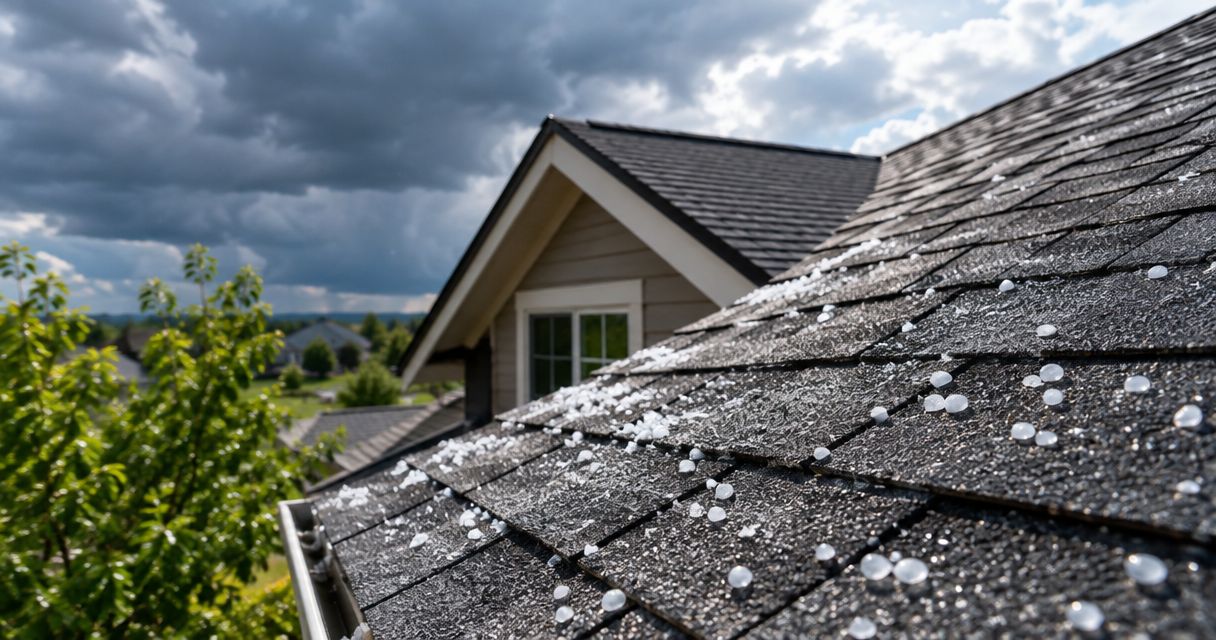
Texas commercial buildings take a beating from 100-plus-degree summer heat, hail bands rolling off the Hill Country, and wind gusts that peel back weak seams. Picking the right system determines whether you replace a roof in 12 years or in 30.
- TPO membrane wins best overall for flat commercial roofs in San Antonio in 2026 — high reflectivity, welded seams, wide contractor availability.
- Standing seam metal is the best commercial roofing system for pitched retail and office buildings needing 40-plus years of service.
- Silicone roof coating is the right call when the deck is sound but the surface membrane is aging out.
- Modified bitumen stays the budget pick for multi-layer low-slope replacements.
- EPDM rubber membrane handles ponding water and temperature swings better than most single-ply options.
Why this matters
A roofing system chosen for a mild climate does not survive a San Antonio July followed by a February freeze followed by an April hail event. Commercial roofs in Central Texas need to handle three separate load types: UV degradation, hail impact, and thermal cycling — often in the same calendar year.
Eagle Eye Roofing & Contracting Services inspects and documents roof condition before recommending a system, because the wrong choice on a 20,000-square-foot warehouse roof costs far more to reverse than the original install.
The best commercial roofing systems for Texas businesses in 2026 balance three things: heat rejection, wind/hail rating, and cost of ownership over 20-plus years — not just the invoice at install.
What makes the best commercial roofing system
- Wind and hail resistance rated for Texas storm exposure
- Solar reflectance that reduces summer cooling load
- Membrane or panel lifespan matched to the building's remaining structural life
- Seam and penetration detailing that resists ponding water and wind uplift
- Maintenance access that does not force a shutdown of business operations
- Code compliance for the building's specific slope and occupancy class
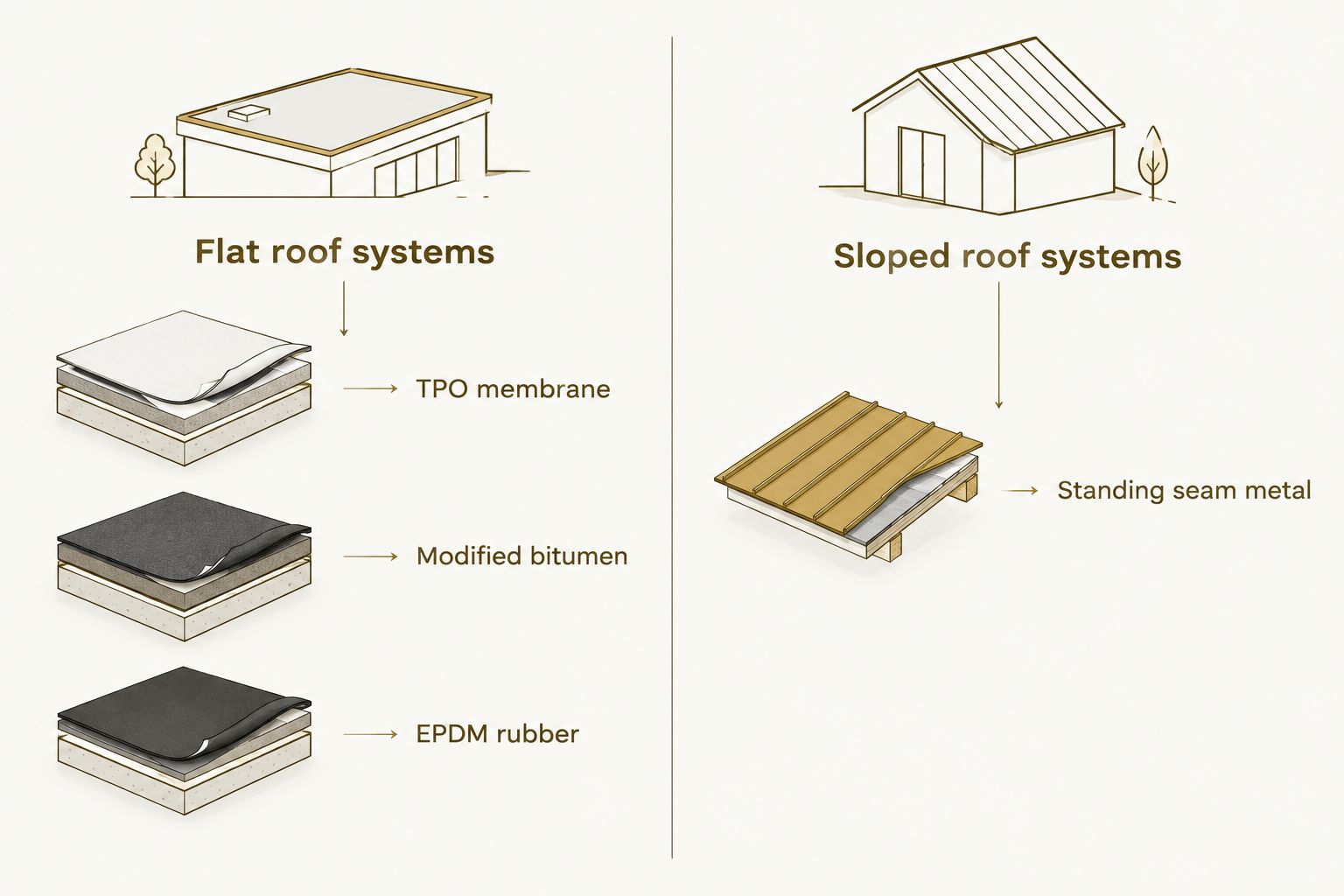
Commercial roofing systems at a glance
| System | Best for | Standout feature | Key limitation |
|---|---|---|---|
| TPO membrane | Large flat commercial roofs | High solar reflectance, welded seams | Seam quality depends on installer skill |
| Standing seam metal | Pitched retail/office roofs | 40+ year service life | Higher install complexity on steep slopes |
| Silicone coating | Extending an aging membrane | No tear-off required | Only works on a structurally sound deck |
| Modified bitumen | Budget-driven low-slope jobs | Multi-layer redundancy | Heavier system, added structural load |
| EPDM rubber | Roofs with ponding water | Flexes across temperature swings | Absorbs heat unless coated |
1. TPO membrane: best commercial roofing system for large flat roofs
TPO (thermoplastic polyolefin) is a single-ply reflective membrane heat-welded at the seams rather than glued. It is the standard pick for strip malls, warehouses, and single-story office buildings across San Antonio because the white or light-gray surface reflects a large share of solar radiation instead of absorbing it into the deck.
TPO pros:
- High solar reflectance cuts summer cooling load on large flat roofs
- Heat-welded seams form a continuous barrier tighter than adhesive-only seams
- Widely stocked, so replacement panels and repair material are easy to source
TPO cons:
- Newer material class with a shorter real-world track record than EPDM
- Seam integrity depends heavily on the welding crew's skill and equipment calibration
- Punctures from rooftop foot traffic or dropped tools require prompt patching
Verdict: Buy for flat or near-flat commercial roofs where cooling costs and reflectivity matter more than absolute lowest material cost.
2. Standing seam metal: best for pitched commercial buildings
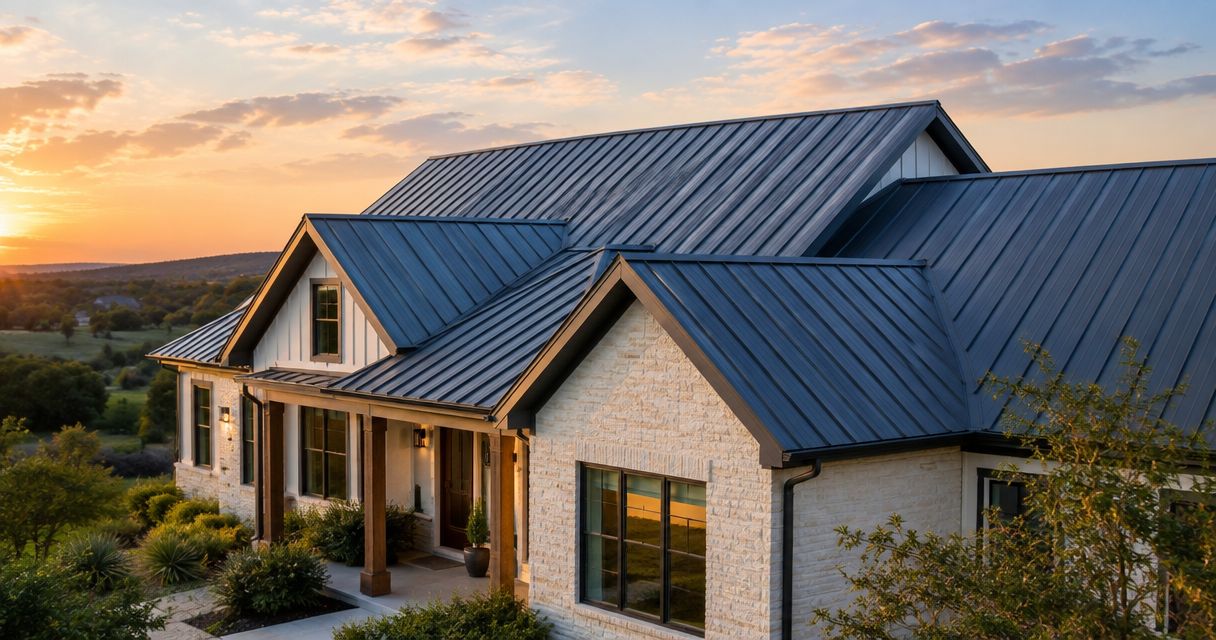
Standing seam metal panels interlock along raised seams that run the length of the roof slope. It is the right system for pitched retail storefronts, medical offices, and municipal buildings rather than flat warehouse roofs, where metal's steep-slope advantages don't apply the same way.
Standing seam metal pros:
- Longest lifespan on this list, often 40 to 70 years with proper maintenance
- Higher-gauge panels resist hail and wind uplift better than most membrane systems
- Low ongoing maintenance once installed correctly
Standing seam metal cons:
- Fabrication and install complexity is higher on steep or irregular slopes
- Upfront labor cost runs higher than membrane systems of comparable square footage
- Without proper underlayment, hail impact noise carries into the building below
Verdict: Buy for any pitched commercial structure planning to hold the building for decades, not a short-term lease term.
3. Silicone roof coating: best for extending an aging roof
Silicone coating is a liquid-applied restoration system rolled or sprayed over an existing membrane — TPO, EPDM, metal, or built-up roofing — once that membrane is aging but the deck underneath is still sound. It is a restoration move, not a replacement.
Silicone coating pros:
- No tear-off means less disruption to business operations during application
- Highly reflective finish, comparable to or better than new TPO
- Seals minor seam gaps and penetration points as part of the application
Silicone coating cons:
- Only performs correctly over a structurally sound deck; it does not fix rot or delamination underneath
- Substrate preparation has to be thorough or the coating fails early
- Does not reset the clock the way a full tear-off replacement does
Verdict: Hold off on full replacement and coat instead when a recent inspection shows the deck is sound but the membrane surface has degraded.
If an inspection shows deck-level damage instead, coating is the wrong move — that points toward a full system replacement, and roof replacement cost in San Antonio breaks down what drives that number up or down.
4. Modified bitumen: best budget-conscious low-slope option
Modified bitumen is a multi-ply asphalt-based system applied in overlapping layers, either torch-applied or cold-adhesive. It has been in commercial use for decades and remains the lower-cost entry point for low-slope roofs.
Modified bitumen pros:
- Lower material cost than premium single-ply systems
- Multiple layers add redundancy against leaks compared to single-ply membranes
- Long, proven track record in commercial applications
Modified bitumen cons:
- Heavier system adds structural load considerations on older buildings
- Torch-applied installation carries fire risk during the work itself
- Less reflective than TPO or silicone unless finished with reflective granules
Verdict: Buy when upfront cost outranks reflectivity and the building's structure can carry the added weight.
5. EPDM rubber membrane: best for ponding water and temperature swings
EPDM is a black synthetic rubber membrane, adhered or mechanically fastened, known for flexing across wide temperature ranges without cracking. That flexibility matters in Texas, where roofs swing from summer heat spikes to winter freezes in the same season.
EPDM pros:
- Flexes through extreme temperature swings better than more rigid membranes
- Decades-long track record in commercial roofing
- Taped seams are simpler to repair than welded seams in the field
EPDM cons:
- Black surface absorbs heat unless coated, working against cooling-cost goals
- Adhesive-set seams can degrade over time compared to heat-welded TPO seams
- Some municipalities require a reflective coating on EPDM to meet current code
Verdict: Buy for roofs with a history of ponding water or where the deck favors mechanical fastening over adhesives.
How this ranking works
Each system is scored against the same six criteria: wind/hail rating, solar reflectance, lifespan, seam durability, maintenance access, and total cost of ownership over 20-plus years — not the install invoice alone. No system wins every category, which is why the ranking assigns each one a distinct use case instead of a single overall winner.
“The wrong roofing system on the right building still fails early — slope, deck condition, and budget decide the system before brand preference ever enters the conversation.”
Which commercial roofing system should you choose?
For most flat-roof commercial buildings in San Antonio, TPO membrane is the default pick for 2026 — reflectivity, welded seams, and material availability make it the lowest-risk choice for warehouses, retail strips, and single-story offices. Pitched buildings should default to standing seam metal instead. If the deck already shows damage, skip coating and go straight to replacement.
Get a Commercial Roof Inspection
Documented findings before any system recommendation.
FAQ
What is the best commercial roofing system for Texas businesses in 2026?
TPO membrane is the best overall commercial roofing system for flat Texas roofs in 2026 because of its solar reflectance and welded seams. Pitched buildings do better with standing seam metal instead.
Is TPO or EPDM better for a San Antonio commercial roof?
TPO reflects more solar heat and has welded seams, making it the better default for flat San Antonio roofs. EPDM performs better where ponding water or temperature-swing flexibility is the main concern.
How long does a standing seam metal commercial roof last?
Standing seam metal roofs typically last 40 to 70 years with proper maintenance, longer than any membrane system on this list. That lifespan applies mainly to pitched, not flat, commercial roofs.
Can silicone coating replace a full roof replacement?
Silicone coating only works as a substitute for replacement when the roof deck underneath is still structurally sound. If the deck itself is damaged, coating will not fix the underlying problem and replacement is required.
Which commercial roofing system handles Texas hail best?
Higher-gauge standing seam metal panels generally resist hail impact better than single-ply membranes. TPO and EPDM can still perform well against hail when installed with proper thickness and impact-rated materials.
Is modified bitumen still a good commercial roofing option in 2026?
Modified bitumen remains a solid budget-driven option for low-slope commercial roofs in 2026, especially where structural load capacity allows the added weight. It is less reflective than TPO unless capped with reflective granules.
How much does a commercial roof replacement cost in San Antonio?
Commercial roof replacement cost in San Antonio depends on system type, roof size, and current deck condition. A documented inspection is the starting point for an accurate number rather than a general estimate.
Does a commercial roofing system need to be reflective in Texas?
Reflective systems like TPO and coated EPDM reduce summer cooling load significantly compared to dark, non-reflective surfaces. Some Texas municipalities also require minimum reflectance for low-slope commercial roofs under current code.
One last thing
The system that fails first on a Texas commercial roof is rarely the membrane itself — it is the flashing, penetrations, and seam terminations around rooftop units, drains, and parapet walls. A 2026 inspection that only checks the field membrane and skips those details misses where most leaks actually start.