Best overall: porcelain tile for a Texas home where moisture and heavy use matter most. Best for busy households: luxury vinyl plank. Best budget option: sheet vinyl for utility rooms. The best flooring materials for Texas homes in 2026 depend on the room, the condition of the surface beneath it, and where any water is coming from.
- Porcelain tile is the best overall flooring material for Texas homes with moisture-prone, heavily used rooms.
- Luxury vinyl plank suits busy households; sheet vinyl suits utility rooms where a continuous surface matters.
- Engineered hardwood fits dry living spaces, while carpet belongs in dry bedrooms.
- If roof damage caused a floor stain, address the water source before replacing the flooring.
Why this matters
A floor can resist a spill and still fail when water stays underneath it. In a San Antonio home, a stained floor near an exterior wall or below a ceiling leak calls for a source check before a material choice. Eagle Eye Roofing & Contracting Services provides roof repair and storm damage restoration for San Antonio homeowners; flooring installation is not among its stated services.
The source of moisture decides the next step. A roof leak, plumbing leak, door threshold and damp slab call for different repairs. Covering the damage with a new floor does not resolve the water entry. This 2026 ranking therefore treats flooring selection and moisture diagnosis as separate decisions.
What makes the best flooring material for a Texas home?
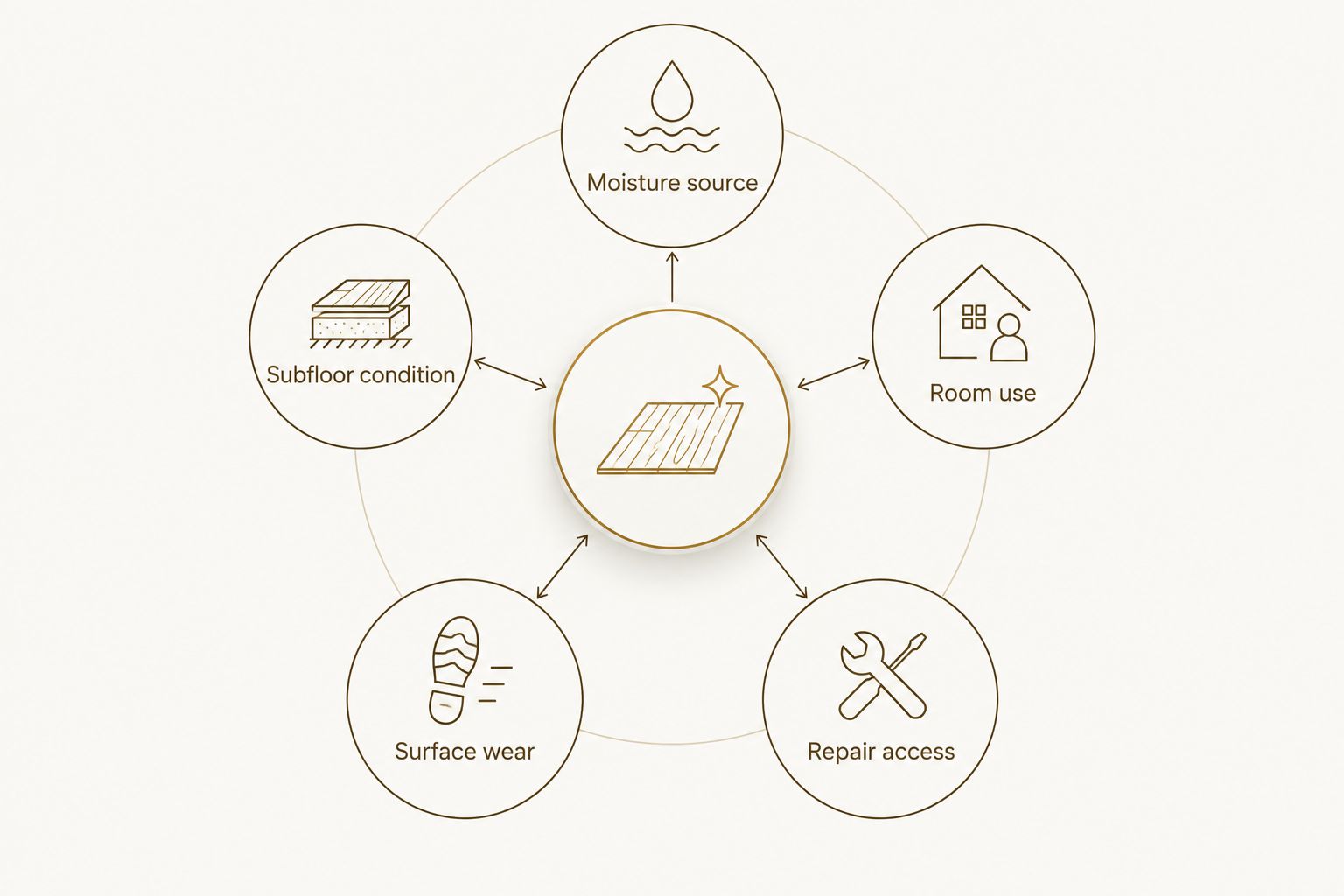
Use these criteria before comparing appearances. A material that works in a dry bedroom is not automatically right for an entry that regularly gets wet.
- Moisture source: Identify whether water arrives from above, at an opening, through plumbing or from beneath the floor. Fix the source before installation.
- Subfloor condition: Check that the surface is suitable for the chosen material. Tile, plank and sheet flooring have different requirements for flatness and preparation.
- Room use: Match the floor to shoes, pets, furniture, dropped objects and the cleaning the room actually needs.
- Surface wear: Look past the material name. Finish, construction and installation details affect how a floor holds up to daily use.
- Repair access: Consider what happens when one section is damaged. Replacing a plank, repairing a concrete finish and replacing a bonded tile are different jobs.
In 2026, do not choose a floor from its water-resistance label alone. That label describes the flooring material, not the condition of the slab or subfloor beneath it. Ask an installer what preparation the existing surface needs and how the proposed floor will handle moisture at edges and transitions.
Best flooring materials for Texas homes at a glance
| Material | Best for | Standout feature | Key limitation |
|---|---|---|---|
| Porcelain tile | Moisture-prone, heavily used rooms | Resists surface water and everyday wear | Hard underfoot; installation depends on a sound substrate |
| Luxury vinyl plank | Busy household living areas | Plank appearance with straightforward cleaning | Water can still reach beneath the planks |
| Engineered hardwood | Dry living rooms | Real wood surface | Wood still responds to moisture |
| Sealed concrete | Homes with a suitable existing slab | Uses the slab as the finished surface | Cracks and finish wear remain visible |
| Carpet | Dry bedrooms | Soft, quiet underfoot | Holds moisture and requires more involved cleaning |
| Sheet vinyl | Utility rooms | Continuous surface with fewer seams | Damage to the sheet can be difficult to conceal |
This is a decision tree, not a claim that every room needs the same floor. The 2026 default is porcelain tile where wet shoes, spills and frequent cleaning are the main concerns. Choose a different material when comfort, an existing slab or the use of a particular room matters more.
1. Porcelain tile: best overall flooring for moisture-prone rooms
Porcelain tile is a strong default for an entry, kitchen or bathroom that needs regular cleaning. The tile itself resists water, and its hard surface stands up to daily foot traffic. Grout lines, joints and the layers below the tile still need appropriate installation; tile is not a substitute for repairing a leak.
Porcelain tile pros:
- Works in rooms where surface splashes and wet shoes are expected.
- Cleans without the care routine required by wood or carpet.
- Offers a consistent surface across connected, heavily used spaces.
Porcelain tile cons:
- Feels hard underfoot and offers little cushioning.
- Cracked tile or grout calls for a repair, and the cause of movement needs attention.
- A poorly prepared base can undermine an otherwise sound tile choice.
Best for: Homeowners who prioritize a hard-wearing, easy-to-clean floor in moisture-prone rooms. Before committing, have the substrate checked and settle where the tile will meet other flooring. In 2026, buy porcelain tile for the room it suits, not as a cover for unexplained dampness.
Verdict: Buy when the base is suitable and the water source is controlled.
2. Luxury vinyl plank: best for busy household living areas
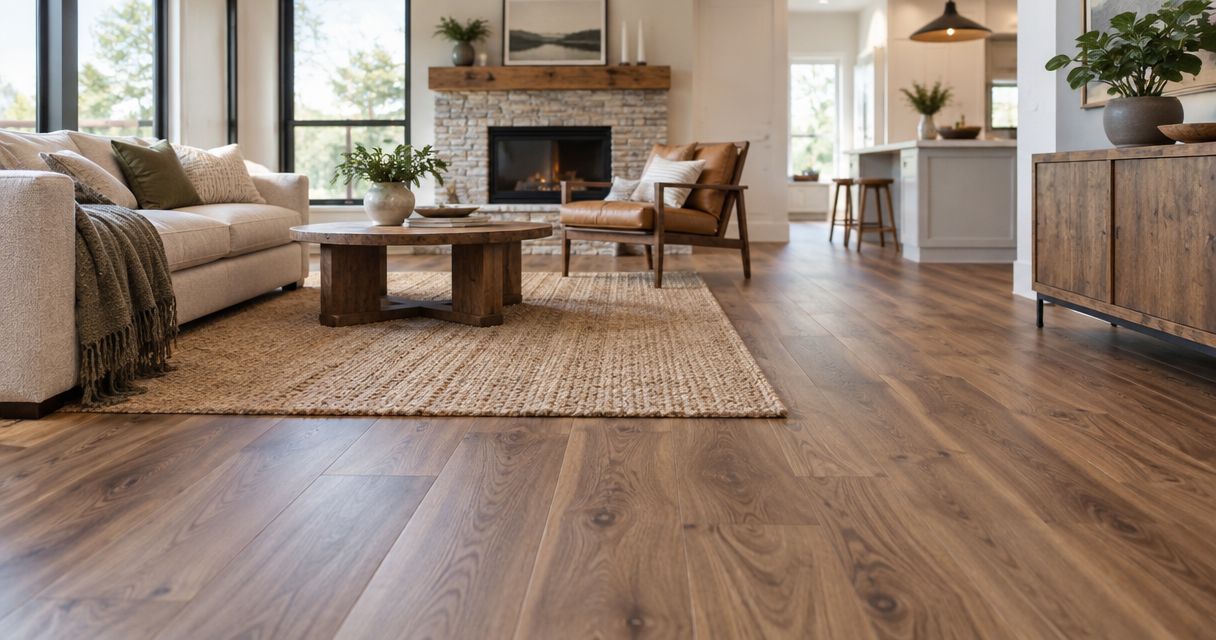
Luxury vinyl plank gives you a plank-format floor without using hardwood throughout a busy living space. Its surface is straightforward to clean, making it practical where tracked-in dirt and everyday spills are routine. Product construction and installation instructions matter; the words vinyl plank alone do not tell you whether a particular floor suits your subfloor.
Luxury vinyl plank pros:
- Provides a wood-look option for rooms that see frequent use.
- Allows individual planks to be addressed when the product and installation permit it.
- Offers a less rigid feel underfoot than tile.
Luxury vinyl plank cons:
- A water-resistant surface does not prevent water from becoming trapped beneath the floor.
- The finished result shows problems in an uneven base.
- Scratches and damaged edges still need attention.
Best for: Households choosing a cleanable floor for a living area or hallway without the feel of tile. Compare the actual product's installation requirements with the existing floor rather than assuming every vinyl plank installs the same way. Luxury vinyl plank is a flooring choice, not a moisture repair.
Verdict: Buy for busy, dry rooms after the subfloor is checked.
3. Engineered hardwood: best for dry living rooms
Engineered hardwood has a real wood surface over a constructed core. It belongs in a living room where you want the appearance of wood and can keep moisture under control. It is not the default for an entry with recurring wet shoes or a room with an unresolved leak.
Engineered hardwood pros:
- Gives dry living spaces a real wood surface.
- Can connect a living room and other dry spaces visually.
- Offers different finishes and plank appearances without switching material categories.
Engineered hardwood cons:
- Wood remains vulnerable to prolonged water exposure.
- Surface damage and repair options depend on the specific product.
- Subfloor and installation requirements need close attention.
Best for: Homeowners who want real wood in a dry, regularly conditioned living space. Check the manufacturer's installation requirements for the product under consideration, especially over a slab. For a 2026 remodel, resolve staining or dampness before selecting a finish.
Verdict: Hold until the room and subfloor are confirmed dry and suitable.
4. Sealed concrete: best when the existing slab can be the floor
Sealed concrete is an option when the home's existing slab can serve as the finished surface. It removes the need to place a separate plank, sheet or tile finish over that slab. The decision turns on the slab itself: its condition, visible cracks and suitability for the finish you want.
Sealed concrete pros:
- Uses an existing surface when that surface is suitable.
- Leaves no plank seams or carpet fibers to clean.
- Keeps slab cracks and other conditions visible rather than hiding them beneath another floor.
Sealed concrete cons:
- Feels hard underfoot.
- Cracks, patches and surface variations remain part of the finished appearance.
- The sealer needs care appropriate to the chosen finish.
Best for: Homeowners who have a suitable slab and accept its visible character. Ask for an assessment of the slab before planning a polished or sealed finish; a photo of another home's concrete floor does not establish what yours will look like. In 2026, the slab's actual condition is the deciding factor.
Verdict: Hold until the existing concrete has been assessed.
5. Carpet: best for dry bedrooms
Carpet earns its place in a bedroom where softness and a quieter feel matter more than spill cleanup. It is the least suitable pick here for a room with recurring water entry. Padding and the floor underneath also need to remain dry.
Carpet pros:
- Feels soft underfoot in a bedroom.
- Reduces the sharp footstep sound of a hard floor.
- Makes a dry room feel distinct from tiled or concrete common areas.
Carpet cons:
- Spills and tracked-in dirt take more work to clean.
- Moisture can reach the padding and surface beneath it.
- A recurring leak makes replacement premature.
Best for: A dry bedroom where comfort is the main goal and household use permits regular cleaning. If a ceiling stain or damp baseboard is part of the room's history, identify and correct the cause first. Eagle Eye Roofing & Contracting Services provides roof repair for San Antonio homeowners when the source is roof-related; carpet selection remains a separate decision.
Verdict: Buy for a dry bedroom; wait if water entry is unresolved.
6. Sheet vinyl: best budget option for utility rooms
Sheet vinyl gives a utility room a continuous floor surface with fewer seams than separate planks or tiles. That makes it a practical choice where easy cleaning matters more than a wood or tile appearance. The sheet still depends on proper preparation and careful treatment of edges.
Sheet vinyl pros:
- Covers a room with fewer joints across the main floor area.
- Cleans easily after ordinary utility-room use.
- Keeps the material choice focused on function.
Sheet vinyl cons:
- A tear or cut through the sheet can be conspicuous to repair.
- Unevenness beneath it can show through the finished surface.
- Water can still get beneath poorly detailed edges or through damage.
Best for: A utility room where a simple, cleanable surface takes priority. Ask how seams, doorways and edges will be handled for the specific room. Do not select sheet vinyl to conceal damp concrete or a leak in 2026.
Verdict: Buy for a sound, dry utility-room base.
How we ranked these flooring materials
The ranking weighs moisture exposure, room use, subfloor demands, cleaning and repair access. Porcelain tile leads because it covers several demanding rooms well, not because every Texas home should be tiled throughout. Luxury vinyl plank ranks next for busy living spaces; the remaining materials win in narrower situations.
The order changes when the job changes. A dry bedroom favors carpet over tile for softness. A suitable existing slab makes sealed concrete a serious option. An unresolved leak moves every flooring purchase behind the water repair, regardless of the material's position in the table.
Check the water source before replacing a damaged floor
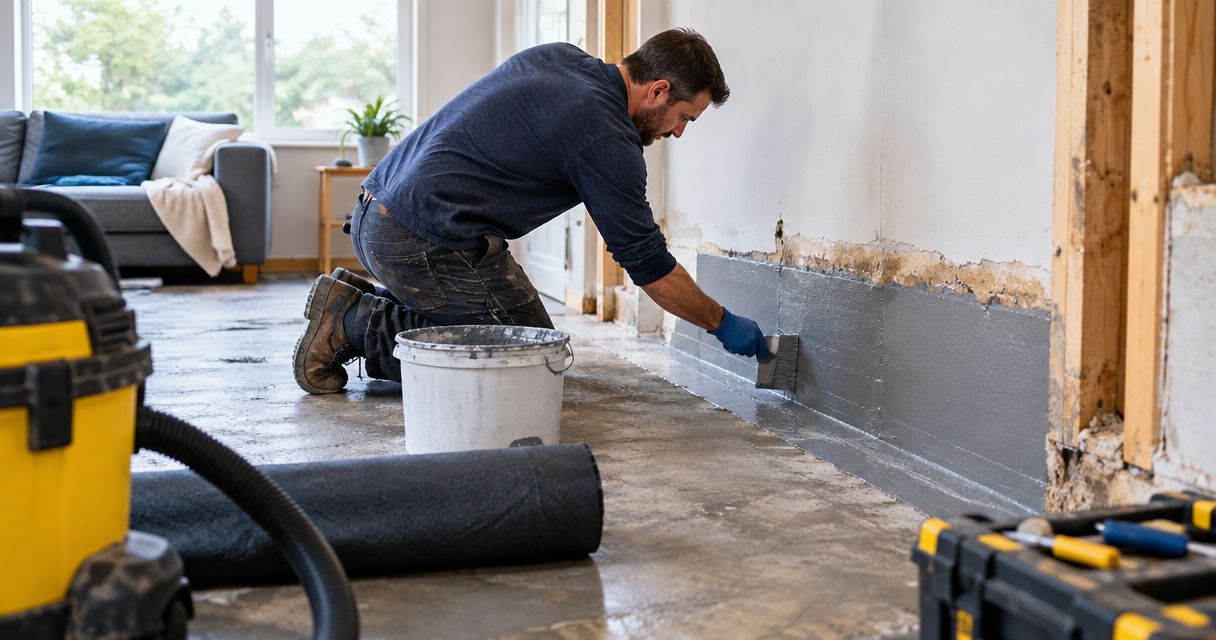
Start with the pattern of damage. Is the stain below a ceiling mark, beside plumbing, near an exterior opening or spread across the slab? Document where it appears, when it changes and whether the surface beneath the current floor is affected. Do not treat the visible stain as proof of a particular cause.
If water is entering through the roof, replacing flooring comes later. Eagle Eye Roofing & Contracting Services handles roof repair and storm damage restoration in San Antonio, making roof-related water entry the part of this decision that fits its stated services. A flooring installer then needs to assess the affected base and specify what can be installed over it.
Address a suspected roof leak
Find the roof repair and storm restoration services available in San Antonio.
Which flooring material should you choose?
Choose porcelain tile if you need one default for moisture-prone, heavily used rooms. Choose luxury vinyl plank for a busy living area, engineered hardwood for a dry living room, carpet for a dry bedroom, sheet vinyl for a utility room or sealed concrete when the existing slab is suitable. These recommendations answer different room needs; they are not interchangeable finishes.
For a whole-home 2026 project, decide room by room and settle the subfloor and moisture questions before choosing appearances. A floor that fits the room but covers an active leak is the wrong purchase. A sound base and a controlled water source make the material comparison useful.
FAQ
What is the best flooring material for Texas homes in 2026?
Porcelain tile is the best overall choice for moisture-prone, heavily used rooms. Luxury vinyl plank is a better fit when a busy living area calls for a plank-format floor with straightforward cleaning.
Is porcelain tile better than luxury vinyl plank for a kitchen?
Porcelain tile is the stronger default when surface moisture and frequent cleaning lead the decision. Luxury vinyl plank suits a kitchen when you prefer a plank feel, provided the product and subfloor are appropriate.
Can I install waterproof flooring over a damp slab?
Do not use a water-resistant floor covering as a fix for a damp slab. Identify the moisture source and follow the chosen product's installation requirements before covering the concrete.
Is engineered hardwood a good choice for a Texas living room?
Engineered hardwood suits a dry living room when you want a real wood surface. Confirm that the specific product and installation method suit the existing subfloor.
Which flooring works best in a dry bedroom?
Carpet is the best choice here when softness and a quieter feel are the priorities. Keep it out of rooms with unresolved leaks or dampness beneath the floor.
Should I replace flooring before fixing a roof leak?
No. Repair the source of water entry before replacing damaged flooring, then have the affected floor base assessed before installation.
Is sealed concrete a good alternative to tile?
Sealed concrete is an option when the existing slab is suitable and you accept visible cracks or surface variation. Tile is the better default when you want a separate finished surface for moisture-prone rooms.
One last thing
The floor you see is not the whole job. Ask what condition the installer found beneath the old flooring and how the proposed material handles that condition. If the damage points to a roof leak, Eagle Eye Roofing & Contracting Services fits the roof-repair step, not the flooring-installation step. That distinction can keep a 2026 floor replacement from covering the problem that damaged the first floor.