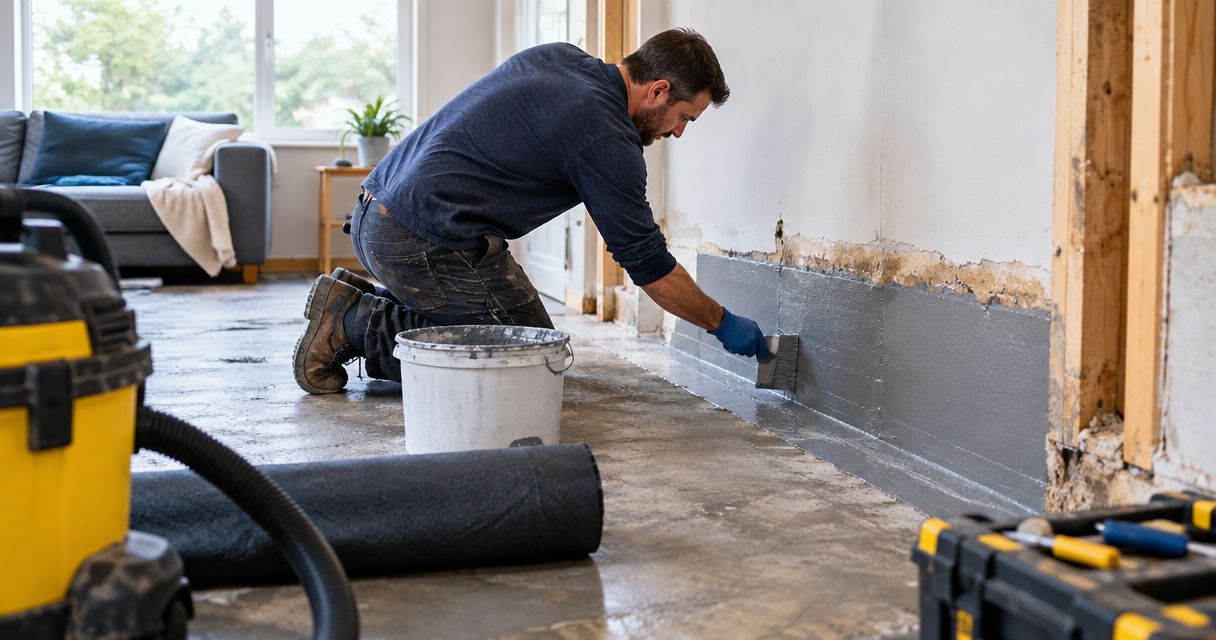
Best overall for runoff-driven flood damage: correct grading and downspout discharge. Best for groundwater seepage: perimeter drainage with a sump pump. Best for sewer backup: a backwater valve. The best waterproofing solutions for flood damage in 2026 depend on where the water entered; no single fix stops every source.
- For surface runoff, grading and downspout corrections are the best waterproofing solutions for flood damage.
- For groundwater seepage, choose perimeter drainage with a sump pump after the entry point is identified.
- A backwater valve addresses sewer backup, not rainwater entering through walls or doors.
- Eagle Eye Roofing & Contracting Services is relevant when storm damage involves the roof or exterior; foundation waterproofing is a separate scope.
Why this matters
Water on a floor does not tell you how it got there. Rain can run toward a foundation, groundwater can press through below-grade openings, a sewer can back up, or overland floodwater can enter through a door. Each path calls for a different repair.
In 2026, start with evidence rather than a coating recommendation. Photograph the waterline and entry points, record when water appeared, and keep people away from standing water near electrical equipment. If the damage includes the roof or storm-damaged exterior, Eagle Eye Roofing & Contracting Services provides roof repair and storm damage restoration in San Antonio. Its stated services do not establish that it installs foundation drains, sump pumps, membranes, or backwater valves.
EPA flood-cleanup guidance calls for drying wet areas and materials within 24 to 48 hours to limit mold growth. Waterproofing work comes after the immediate safety and cleanup decisions; sealing a wall does not make wet insulation or other damaged materials dry.
What makes the best waterproofing solution for flood damage?
Use these criteria before comparing products or approving a scope of work:
- Correct water source: Identify whether water came from surface runoff, groundwater, a foundation wall, a sewer line, or overland flooding.
- Entry-point control: Favor work that keeps water outside or directs it away before relying on an indoor pump or cleanup.
- Site fit: Check the ground slope, foundation access, drainage route, and openings that actually exist at the property.
- Failure mode: Ask what happens during a power outage, blocked drain, overwhelmed sewer, or flood above a barrier.
- Maintenance: Include access for inspection and cleaning. A buried or hidden component still needs a workable maintenance plan.
- Repair sequence: Address wet and contaminated materials before closing surfaces or treating a finished wall as proof that the problem is solved.
Do not choose by product label alone. Waterproof coatings, drainage systems, and flood barriers solve different problems, even when each is sold as waterproofing.
Waterproofing options at a glance
| Option | Best for | Standout feature | Key limitation |
|---|---|---|---|
| Grading and downspout corrections | Surface runoff | Directs roof and yard water away before it collects at the home | Does not stop groundwater or rising floodwater |
| Perimeter drainage with a sump pump | Groundwater seepage | Collects water that reaches the foundation and pumps it away | Depends on a suitable discharge route and pump operation |
| Exterior foundation membrane | Water entering through a below-grade wall | Treats the outside face of the affected wall | Requires excavation and does not correct poor drainage by itself |
| Backwater valve | Sewer backup | Blocks reverse flow through a sewer connection | Does not stop water entering from outside |
| Deployable flood barriers | Water entering through a known opening | Closes a specific door or other vulnerable opening | Water can enter elsewhere or pass beneath the structure |
These are source-specific options, not interchangeable upgrades. An inspection should identify the water path before you commit to excavation, plumbing work, or a barrier.
Match the water path before choosing a repair
Look for the first visible entry point, but do not assume it is the source. Water can travel behind finishes before it appears inside. Compare the timing of the water with rainfall, sewer use, and rising water outside; then ask a qualified professional to verify the cause where the path is hidden.
For a practical first pass, separate the evidence into surface runoff, groundwater seepage, and sewer backup. Match confirmed surface runoff to grading and downspout work, confirmed groundwater seepage to perimeter drainage, and confirmed sewer backup to a backwater valve. Exterior wall leaks and water crossing an opening need their own checks.
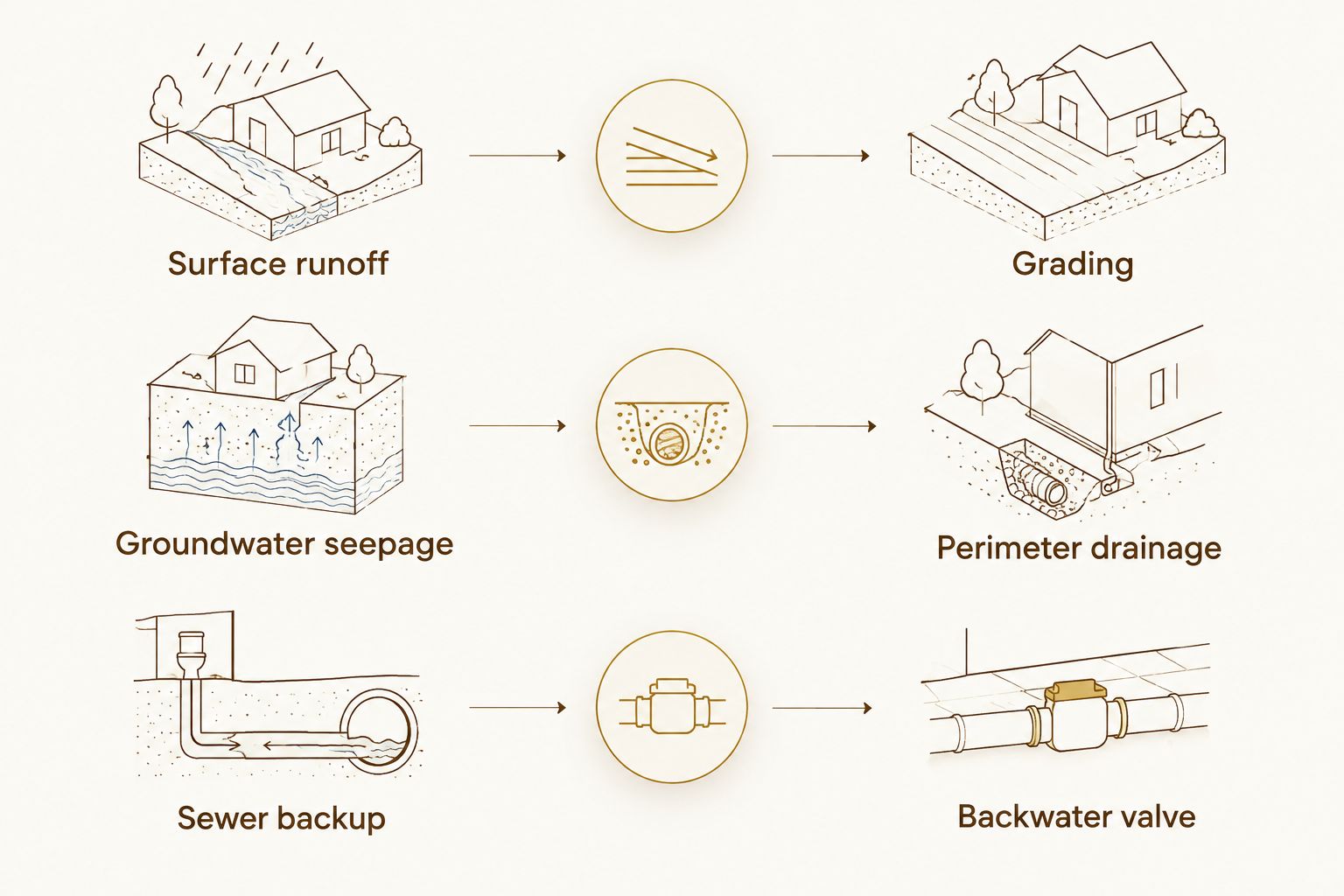
The distinction matters in San Antonio after heavy rain. A wet wall beside a downspout points to a different investigation than sewage rising from a drain. In either case, document what happened before repairs cover the evidence.
1. Grading and downspout corrections: best for surface runoff
Grading changes the direction surface water travels across the ground. Downspout corrections address roof runoff that discharges beside the foundation. Together, they are the best first choice when inspection confirms that rainwater is collecting against the home.
This is not a universal flood defense. Water arriving across the property during a larger flood can exceed what local grading can redirect, and groundwater can enter even when the visible ground slopes away.
Grading and downspout correction pros:
- Addresses a visible source before water reaches a below-grade wall.
- Makes roof runoff part of the drainage assessment.
- Gives you observable conditions to check during later rain.
Grading and downspout correction cons:
- Cannot stop sewer backup or water rising through the ground.
- A correction that sends water toward another vulnerable area creates a new problem.
Best for: Homes where inspection ties the damage to surface runoff or roof water discharged near the foundation. Verdict: Buy when that path is confirmed; skip it as the sole fix for groundwater.
2. Perimeter drainage with a sump pump: best for groundwater seepage
A perimeter drain collects water near the foundation; a sump pump moves collected water to an approved discharge point. This combination addresses groundwater seepage rather than water crossing a doorway from outside.
Ask where the drain collects water, where the pump sends it, and what happens if the pump stops. In 2026, the scope should distinguish the drainage work from interior repairs: a dry-looking finished wall is not evidence that water pressure outside has changed.
Perimeter drainage and sump pump pros:
- Provides a collection path for water that reaches the foundation.
- Allows pump operation and discharge to be checked.
- Targets below-grade seepage that surface grading alone cannot resolve.
Perimeter drainage and sump pump cons:
- Pump failure can leave the collection system unable to remove water.
- A poor discharge location can send pumped water back toward the home.
Best for: Confirmed groundwater seepage at a foundation. Verdict: Buy when the water source and discharge plan are documented; hold if the entry point is still unknown.
3. Exterior foundation membrane: best for a leaking below-grade wall
An exterior membrane creates a water-resistant layer on the outside of an accessible foundation wall. Its strongest use case is a documented wall-entry problem where the affected exterior face can be exposed and repaired.
Do not treat the membrane as a substitute for directing water away. If water continues to collect against the wall, the plan still needs to address the conditions bringing it there. Ask how the wall will be prepared, how openings will be treated, and which drainage work belongs in the same scope.
Exterior foundation membrane pros:
- Places protection on the side where water reaches the wall.
- Allows exposed wall defects to be assessed before they are covered.
- Can be scoped to a documented below-grade wall-entry problem.
Exterior foundation membrane cons:
- Excavation makes the work disruptive.
- A membrane does not fix sewer backup, an overflowing opening, or a bad discharge route.
Best for: A confirmed below-grade wall leak with exterior access. Verdict: Buy as part of a defined wall-and-drainage repair; skip a membrane-only proposal that ignores the water source.
4. Backwater valve: best for sewer backup
A backwater valve is a plumbing measure that blocks reverse flow through a sewer connection. It belongs in the conversation when wastewater backs up through a drain or fixture, not when rain crosses a threshold or seeps through a foundation wall.
Have a qualified plumber confirm the backup path and assess installation and maintenance requirements. If floodwater also entered from outside, the valve addresses only the sewer portion of the damage.
Backwater valve pros:
- Targets reverse flow through the sewer connection.
- Gives a plumber a specific failure path to assess.
- Separates sewage protection from exterior waterproofing work.
Backwater valve cons:
- Cannot stop rainwater or groundwater entering the building envelope.
- Requires the correct plumbing configuration and ongoing access for maintenance.
Best for: Confirmed sewer backup. Verdict: Buy after a plumbing assessment; skip it as a remedy for water entering through walls or doors.
5. Deployable flood barriers: best for a known opening
A deployable barrier closes a specific vulnerable opening before expected water reaches it. Consider one when past flooding shows water crossing a doorway or similar entry point and the building has a workable place to install the barrier.
A barrier is not a seal for the entire structure. Water can find another opening or reach the building from below. Ask how the barrier connects to the surrounding surface, how it is deployed, and which other entry paths remain exposed.
Deployable flood barrier pros:
- Focuses protection on an identified opening.
- Can be checked against the location of previous water entry.
- Keeps the proposed work distinct from permanent foundation or plumbing repairs.
Deployable flood barrier cons:
- Must be in place before water arrives.
- Does not address groundwater, sewer backup, or entry elsewhere.
Best for: A repeatedly affected opening with a documented flood path. Verdict: Buy for that opening only; skip it as a whole-home waterproofing claim.
How these options were ranked
The order favors preventing common rainwater entry before adding systems that collect water after it reaches the structure. It then separates foundation-wall entry, sewer backup, and water crossing an opening. This is a decision order, not a claim that the first option works for every flooded home.
For a property damaged in 2026, move the confirmed source to the top of your own list. If sewage backed up, start with the plumbing assessment. If water came through a below-grade wall, compare exterior wall work with the drainage plan. Do not authorize every item in the table without evidence that each addresses an actual path.
Which waterproofing solution should you choose?
Choose grading and downspout corrections as the default only when the evidence points to runoff collecting at the home. Choose perimeter drainage with a sump pump for confirmed groundwater seepage, an exterior foundation membrane for a confirmed below-grade wall leak, a backwater valve for sewer backup, or a deployable barrier for water crossing a known opening.
If you cannot identify the source, hold the waterproofing decision and get the entry path documented first. After a 2026 flood, photographs, cleanup records, and an inspection give the repair scope something concrete to answer. No coating or barrier replaces drying damaged materials.
FAQ
What are the best waterproofing solutions for flood damage?
The best waterproofing solutions for flood damage match the entry path: grading for surface runoff, perimeter drainage and a sump pump for groundwater, and a backwater valve for sewer backup. A foundation membrane or opening barrier addresses a different, confirmed path.
Is a waterproof coating enough after a flood?
No, a waterproof coating is not a complete response to flood damage. The water source and wet materials still need attention, and a surface coating does not stop sewer backup or water crossing an opening.
Is a sump pump better than exterior grading?
A sump pump is better suited to collected groundwater; exterior grading is better suited to surface runoff. Choose based on the confirmed source rather than treating them as competing versions of the same repair.
Will a backwater valve stop floodwater entering my home?
A backwater valve addresses reverse flow through a sewer connection. It does not block water entering through a door, foundation wall, or roof.
What should I document before waterproofing a flood-damaged home?
Document the waterline, visible entry points, affected materials, and when the water appeared. Keep photographs and cleanup records before repairs conceal the damaged areas.
How soon should wet materials be dried after flooding?
EPA flood-cleanup guidance calls for drying wet areas and materials within 24 to 48 hours to limit mold growth. Electrical and contamination hazards must be addressed before cleanup work begins.
Can a flood barrier protect an entire home?
A deployable barrier protects a specific opening, not every possible water path. Groundwater, sewer backup, and unprotected openings need separate assessment.
Can a roofing contractor fix foundation waterproofing?
Do not assume roof repair and foundation waterproofing are the same scope. Eagle Eye Roofing & Contracting Services states that it provides roof repair and storm damage restoration; confirm the qualifications and scope of any contractor proposed for foundation or plumbing work.
One last thing
A property outside a mapped 1% annual-chance flood area is not automatically safe from flooding. That map designation describes a level of flood probability, not a promise that water cannot reach your home. For a 2026 repair, the recorded entry path is more useful than a generic waterproofing package.
If the same storm also damaged the roof, keep that inspection separate from the foundation or plumbing diagnosis. Eagle Eye Roofing & Contracting Services works on roofing and storm restoration; a roof repair addresses water entering from above, not floodwater rising from below.