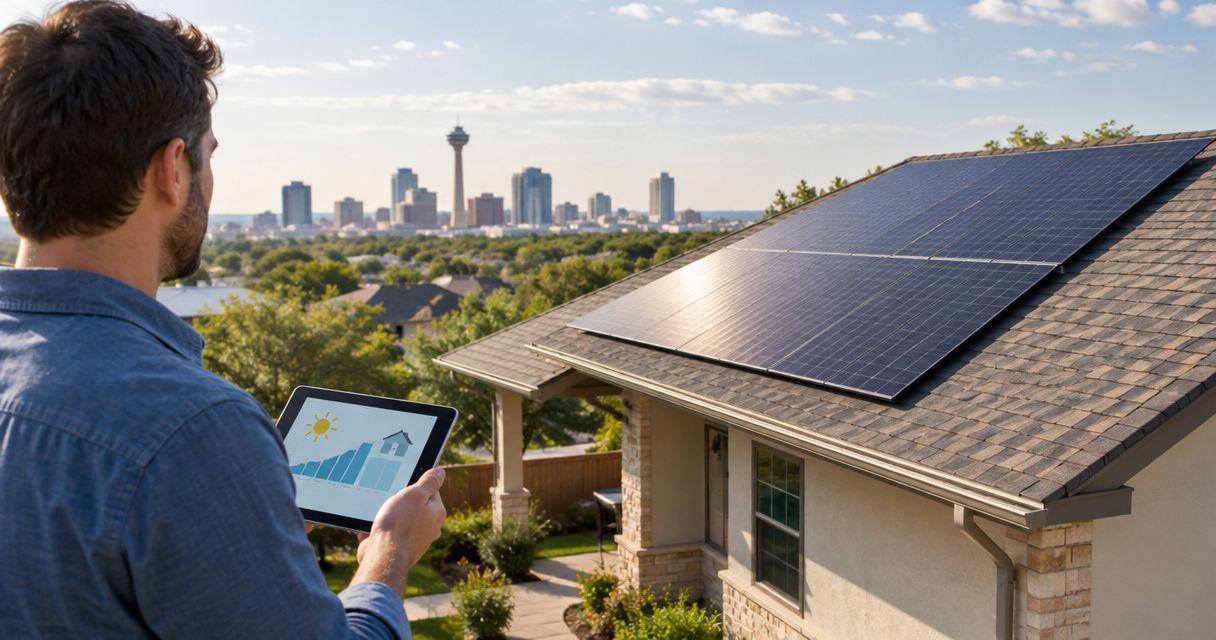
Best overall: monocrystalline rooftop panels for most San Antonio homeowners. Best for a roof-integrated look: solar shingles. Best budget option to compare: polycrystalline panels, but only when a written proposal shows an advantage. This 2026 guide ranks four solar panel options by roof fit, installation complexity, and the questions you need answered before work begins.
- Best solar panels for San Antonio homeowners in 2026: monocrystalline panels are the default choice for most suitable roofs.
- Solar shingles fit homeowners who prioritize roof integration, especially when a roof replacement is already planned.
- Eagle Eye Roofing & Contracting Services can address roof condition before a separate solar installation is planned.
- Compare written proposals using the same roof area, shading assumptions, and equipment scope.
Why this matters
A solar proposal answers an energy question, but your roof has to carry the installation. If the roof needs repair or replacement, settling that work before panels go on avoids planning a new array around an unresolved roof problem. Eagle Eye Roofing & Contracting Services provides roof repair, replacement, and storm damage restoration in San Antonio; its role here is roof readiness, not a claim to sell or install solar panels.
The best solar panels for San Antonio homeowners are the panels that fit a sound roof and a documented installation plan. A higher-rated module does not fix shade, damaged roofing, poor flashing, or a layout that leaves the installer without workable space.
What makes the best solar panels for a San Antonio home?
Use these criteria before comparing equipment names. Ask every solar company to show how its proposal addresses each one for your specific roof.
- Usable roof area: Compare the space left after setbacks, obstructions, vents, and shaded sections are accounted for. A module's rating alone does not tell you how many will fit.
- Roof condition: Document active leaks, worn materials, damaged decking, and prior storm repairs before approving penetrations or removing roofing for solar shingles.
- Shade and orientation: Ask for a layout that identifies nearby trees, structures, and roof planes rather than treating the entire roof as equally productive.
- Attachment and water management: For mounted panels, require a written plan for attachments and flashing. For solar shingles, clarify how the active roofing and surrounding materials meet.
- Service access: Confirm how roof repairs, panel removal, and electrical work will be handled after installation. The answer should identify who owns each part of the work.
- Comparable output estimates: Read proposals against the same assumptions. Standard test conditions rate modules at 1,000 W/m² of irradiance and a 25°C cell temperature; those laboratory conditions are not a promise of rooftop output in San Antonio.
Solar panel options at a glance
| Option | Best for | Standout feature | Key limitation |
|---|---|---|---|
| Monocrystalline rooftop panels | Most suitable residential roofs | Strong output from limited roof area | Racking and attachments add roof interfaces |
| Solar shingles | Roof-integrated projects | Generate electricity as part of a roofing system | Roofing and electrical scopes must be coordinated |
| Polycrystalline rooftop panels | Comparing a lower-cost written proposal | Familiar framed-panel installation approach | Roof-area efficiency generally trails monocrystalline panels |
| Thin-film solar | Projects with a specifically engineered roof fit | Flexible system designs exist | Product and attachment fit vary; not a default residential choice |
These are technology categories, not interchangeable products. A written proposal still needs to name its actual modules, mounting method, electrical equipment, and responsible installers. In 2026, do not rank a proposal solely by its panel label.
1. Monocrystalline rooftop panels: best for most suitable roofs
Monocrystalline panels are the 2026 default when a San Antonio home has a sound roof and usable sun-exposed space. They use single-crystal silicon cells and are typically installed as framed modules on a mounting system above the roofing. Their main advantage over polycrystalline panels is higher efficiency per unit of panel area, which matters when vents, hips, shade, or setbacks limit the array.
That advantage does not make every monocrystalline proposal equal. Module placement, attachment details, roof age, and the written output estimate still determine whether a particular plan makes sense. If two proposals use different roof areas or shading assumptions, their totals do not provide a clean comparison.
Monocrystalline panel pros:
- Make effective use of constrained roof area.
- Give homeowners a conventional rooftop-panel format to compare across proposals.
- Can be planned separately from a roof replacement when the existing roof is suitable.
Monocrystalline panel cons:
- Mounting introduces attachment points that need a documented water-management plan.
- Panels can complicate access to roofing beneath the array.
- Output still depends on shade, layout, and installed system design.
Best for: A homeowner whose roof condition is documented and whose primary goal is a conventional rooftop array. Verdict: Buy when the installer identifies the exact modules, roof attachments, and repair responsibilities in writing.
2. Solar shingles: best for a roof-integrated project
Solar shingles generate electricity while forming part of a roof system. Consider them when a roof replacement is already being planned and you want the solar and roofing decisions made together. That timing matters: the solar design affects where active components go, while the roof plan determines how adjacent areas, edges, and penetrations are completed.
Do not treat solar shingles as ordinary shingles with an electrical add-on. Ask the proposed teams to identify the roofing contractor, electrical installer, and party responsible for junctions between active and non-active roof areas. Eagle Eye Roofing & Contracting Services is a roofing contractor that provides roof replacement; its stated services do not establish it as a solar-shingle supplier or electrical installer.
Solar shingle pros:
- Integrate generation into a planned roofing project.
- Avoid the appearance of a separate framed-panel array.
- Put roof layout and solar layout in the same planning conversation.
Solar shingle cons:
- Roofing and electrical responsibilities need especially clear boundaries.
- Replacing a damaged active section differs from replacing an ordinary roof covering.
- Aesthetic integration does not make shade or poor roof orientation disappear.
Best for: A homeowner already planning substantial roof work who wants an integrated design and has clear written scopes from qualified contractors. Verdict: Buy only after the roofing and electrical plans agree on details and responsibilities.
3. Polycrystalline rooftop panels: best for a documented value comparison
Polycrystalline panels use silicon cells made from multiple crystal fragments. They remain a useful comparison category when a solar company offers a specific system and documents how it fits your roof. Their lower efficiency per unit of area than monocrystalline panels makes available roof space particularly important.
Do not assume the technology name establishes the better deal. Compare the proposed system's equipment, usable roof coverage, estimated production, and installation scope side by side. If the proposal takes more roof area without giving you a meaningful advantage, choose the better-fitting design instead.
Polycrystalline panel pros:
- Provide a second silicon-panel option for a direct proposal comparison.
- Use a familiar framed-panel approach with a separate mounting system.
- Can work when roof area is sufficient for the proposed layout.
Polycrystalline panel cons:
- Generally need more area than monocrystalline panels for the same rated output.
- Still require attachments, flashing, and future roof-access planning.
- A lower-cost assumption is not a substitute for an actual written proposal.
Best for: A homeowner comparing a specific polycrystalline proposal against a monocrystalline design for the same roof. Verdict: Hold until the written proposals show which system fits and what each includes.
4. Thin-film solar: best for a specially engineered application
Thin-film solar is a family of photovoltaic technologies that deposits active material in thin layers. Some products allow different physical formats from conventional framed silicon panels. That does not mean an arbitrary thin-film product can go on any San Antonio roof.
Start with the exact product and roof assembly, not a general claim about flexibility or weight. The designer must document attachment, weather protection, electrical layout, and compatibility with the intended roofing. If those details are missing, a conventional panel proposal gives you a clearer basis for comparison.
Thin-film solar pros:
- Offers physical formats beyond standard framed silicon modules.
- Can be considered when a project has a specific, documented design constraint.
- Prompts a detailed discussion of the full roof assembly rather than panel ratings alone.
Thin-film solar cons:
- Suitability depends heavily on the particular product and roof design.
- Roof-area requirements can be less favorable than those of efficient crystalline-silicon modules.
- It is not a sensible default without an engineered installation plan.
Best for: A homeowner whose qualified project team has identified a specific roof constraint and a compatible system. Verdict: Skip as a starting point for an ordinary residential comparison.
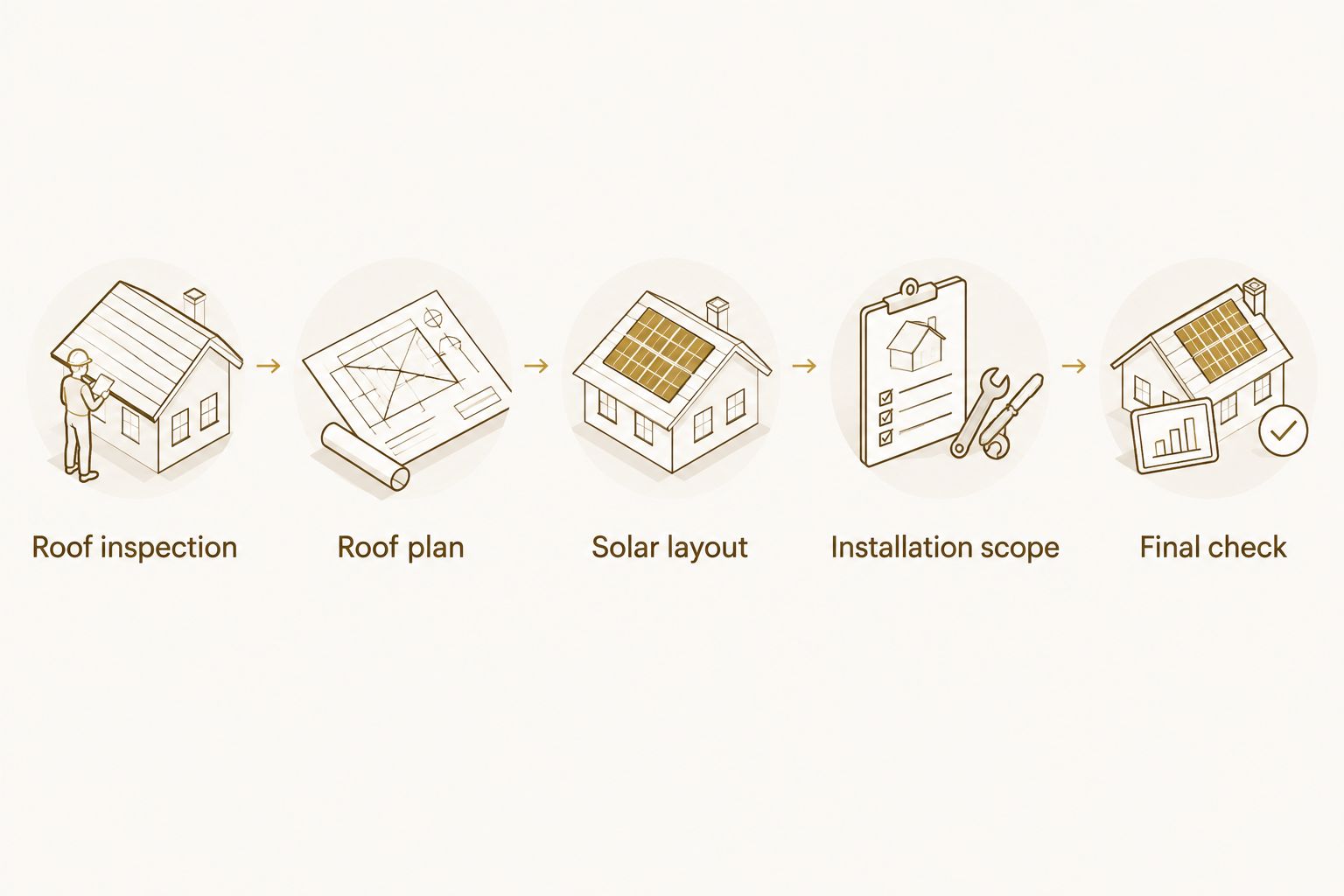
Inspect, document, plan, then install
Before signing a solar installation agreement, separate the roof decision from the equipment sales pitch. Eagle Eye Roofing & Contracting Services emphasizes inspection, documentation, and a clear scope of work for its roofing services. Apply that same discipline to the handoff between your roofer and solar installer in 2026.
- Roof inspection: Identify visible damage, leaks, worn areas, and previous repairs. An electrical production estimate does not answer whether roofing needs work.
- Roof plan: Decide which roofing issues must be addressed before attachments or integrated solar materials are installed. Put the intended work in writing.
- Solar layout: Ask the installer to mark array locations, obstructions, shaded areas, and planned attachment points on the roof plan.
- Installation scope: Record which contractor handles roofing, flashing, electrical work, and any removal needed for later roof repairs.
- Final check: Compare completed roof details and equipment placement with the approved plans, and retain the relevant documents.
A roof replacement changes the timing of this process. If you are already comparing materials, review roofing materials for San Antonio homes before approving a solar layout. The roof covering and solar attachment method have to work together; neither decision should be made in isolation.
Address the roof first
Review roof repair and replacement services before finalizing a solar installation plan.
How we ranked these options
The order prioritizes a clear path for a typical homeowner comparing technologies, not a claim that one named manufacturer's product outperforms another. Monocrystalline panels rank first because they use limited roof area efficiently within a conventional rooftop format. Solar shingles rank next for projects where roof integration is the goal, while polycrystalline panels require an actual proposal to prove their value. Thin-film solar belongs last for general residential shopping because its suitability depends on a specific product and engineered roof assembly.
This ranking does not replace a site plan. In 2026, a panel category cannot tell you whether your roof needs repair, how much shade an array receives, or which contractor will fix a leak at an attachment. Those answers belong in the written project scope.
Which solar panels should you choose?
Choose monocrystalline rooftop panels as your default comparison in 2026. Ask for an array layout, roof-attachment details, and an output estimate tied to your actual roof. If you are replacing the roof and want solar built into its appearance, compare a solar-shingle proposal with a conventional-panel proposal before selecting either.
For polycrystalline panels, require a documented reason to prefer the specific offer. For thin-film solar, require a product-specific roof design. Whatever you choose, settle roofing defects before covering the area with equipment. Eagle Eye Roofing & Contracting Services provides the roofing and storm-restoration services relevant to that first decision; the solar installer must document the electrical system and its installation.
FAQ
What are the best solar panels for San Antonio homeowners in 2026?
Monocrystalline rooftop panels are the best default for most San Antonio homeowners with suitable roofs in 2026. Compare the actual layout, shading assumptions, and attachment plan before choosing a specific system.
Are solar shingles better than rooftop panels?
Solar shingles are better suited to homeowners who prioritize roof integration during a planned roofing project. Conventional monocrystalline panels are the simpler starting point for comparing rooftop solar designs.
Should I replace my roof before installing solar panels?
Replace or repair the roof first if a documented inspection finds work that should precede solar installation. Decide the roofing scope before approving attachments or an integrated solar design.
Are polycrystalline panels a good budget choice?
Polycrystalline panels are a budget option only when a written proposal establishes an advantage for your roof. Compare usable area, equipment, projected output, and installation scope rather than relying on the technology label.
Do solar panels protect a roof from hail?
Do not treat solar panels as a substitute for a sound, storm-ready roof. Ask how the proposed modules, attachments, and roof covering will be inspected and repaired after storm damage.
Who fixes the roof if a solar attachment leaks?
The written installation scope should identify who is responsible for attachments, flashing, and later repairs. Confirm that responsibility with the roofing and solar contractors before installation.
Can Eagle Eye Roofing & Contracting Services install solar panels?
Its stated services cover roofing, storm damage restoration, and commercial building maintenance, not solar-panel installation. Contact Eagle Eye Roofing & Contracting Services about roof condition and use a qualified solar installer for the solar-system scope.
One last thing
A panel's laboratory rating is not a roof inspection. The standard 1 kW equals 1,000 W of rated power, but that conversion says nothing about a leak, a shaded roof plane, or future access beneath the array. In 2026, get the roof condition and contractor handoff documented before treating any equipment comparison as a final decision.