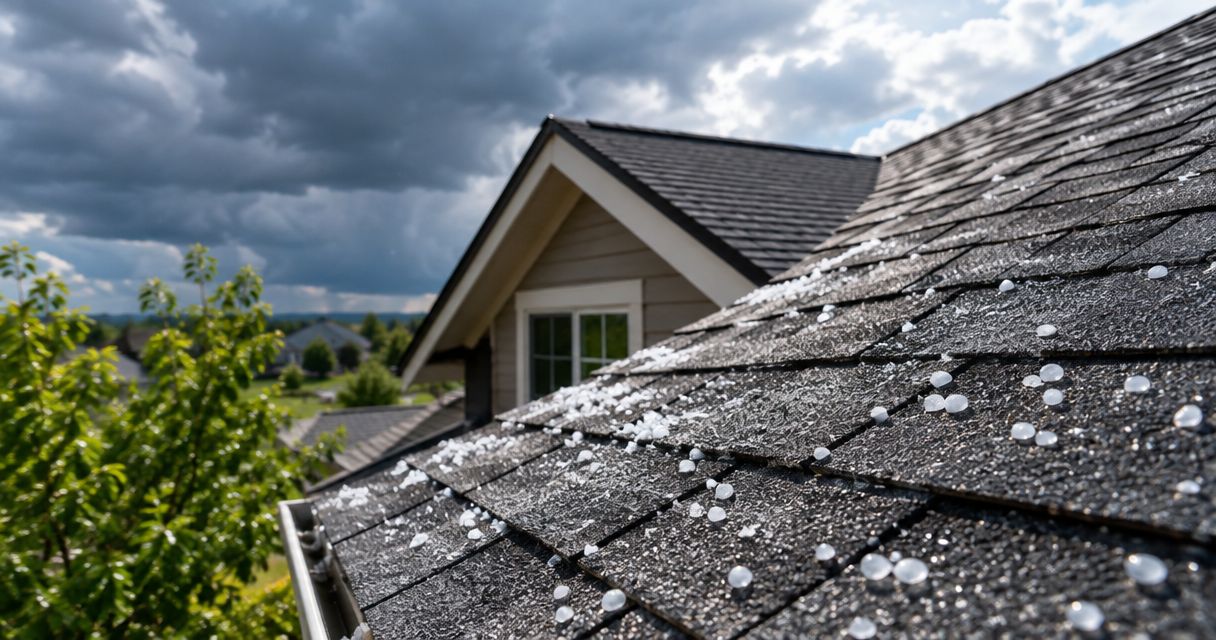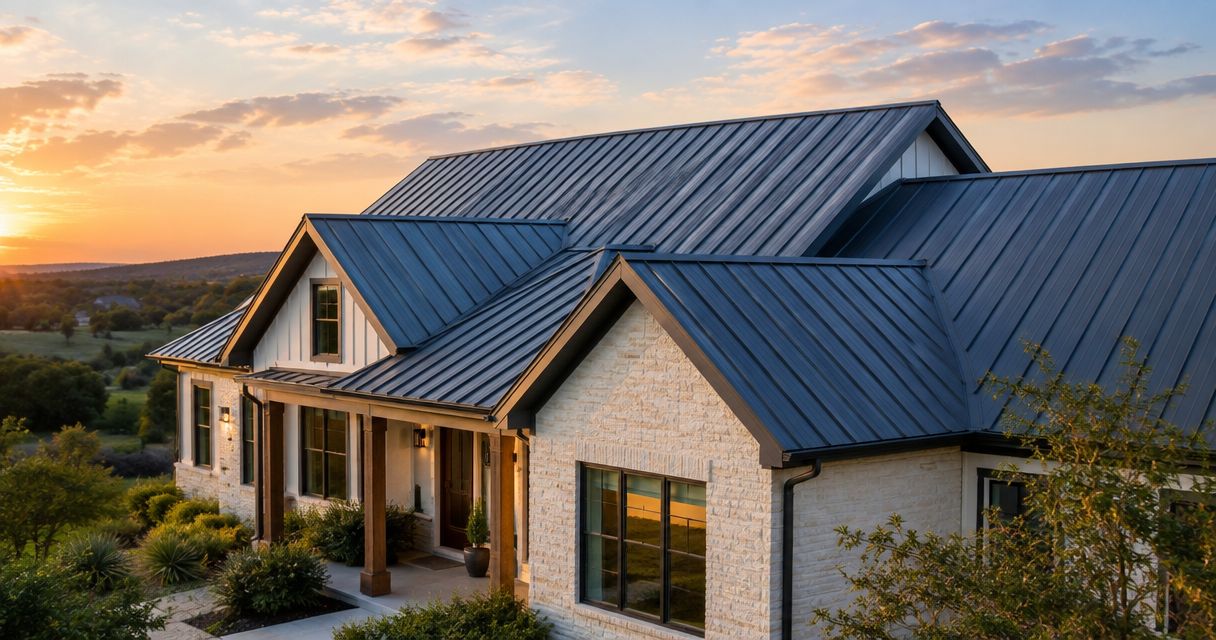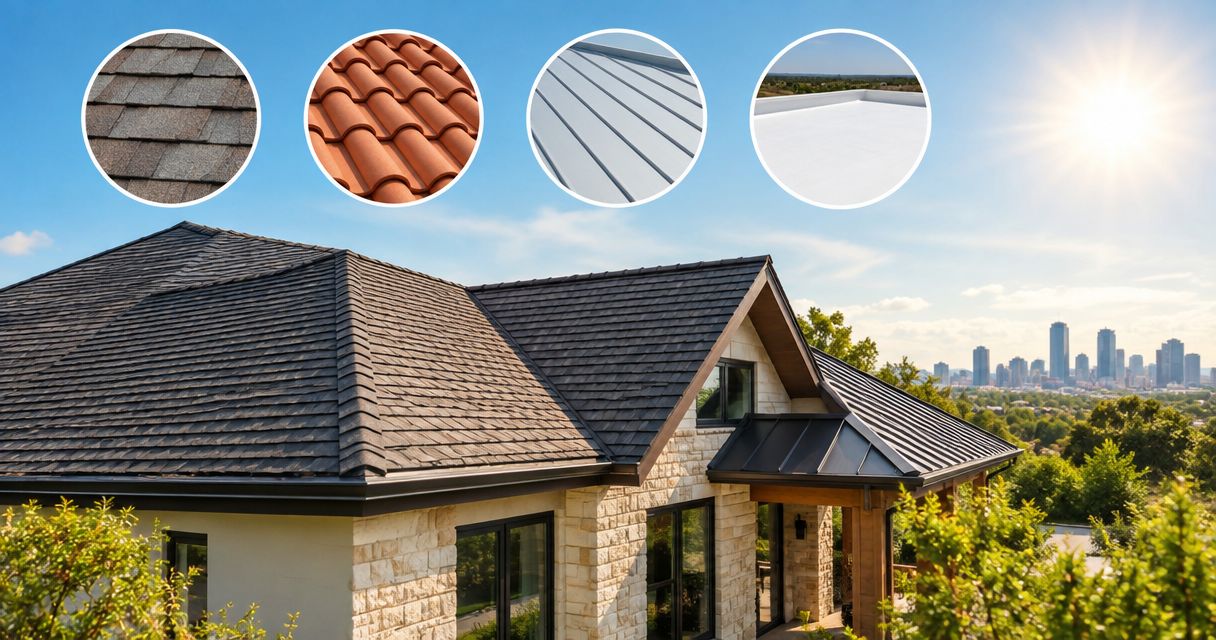
San Antonio roofs face triple-digit summer temperatures, intense UV exposure, and hailstorms that roll through Central Texas most springs — the roof type you pick determines whether your attic cooks and your shingles crack early, or your home stays comfortable and your roof lasts decades.
Best overall: standing seam metal roofing. Best for hail-prone properties: Class 4 impact-resistant asphalt shingles. Best budget option: cool/reflective asphalt shingles.
- Standing seam metal roofing wins for hot Texas climates in 2026 on heat reflection and a 40-70 year lifespan.
- Class 4 impact-resistant shingles are the pick for hail-prone San Antonio neighborhoods.
- Clay and concrete tile suit Spanish and Mediterranean-style homes but need structural framing to carry the weight.
- TPO single-ply membrane is the standard for commercial flat roofs handling San Antonio summer heat.
- Cool/reflective asphalt shingles are the budget option that still cuts attic heat gain.
Why this matters
A roof in San Antonio does two jobs a roof in Ohio never has to: bounce back solar heat for five months straight, and survive hail that shows up with almost no warning. Pick the wrong material and you're looking at a premature reroof, a spiked cooling bill, or both.
Eagle Eye Roofing inspects roofs across San Antomio for exactly this reason — the right material for a 1980s ranch house is not the right material for a commercial flat roof or a Spanish-style build with clay tile accents already on the facade. The comparison below sorts by use case, not by hype.
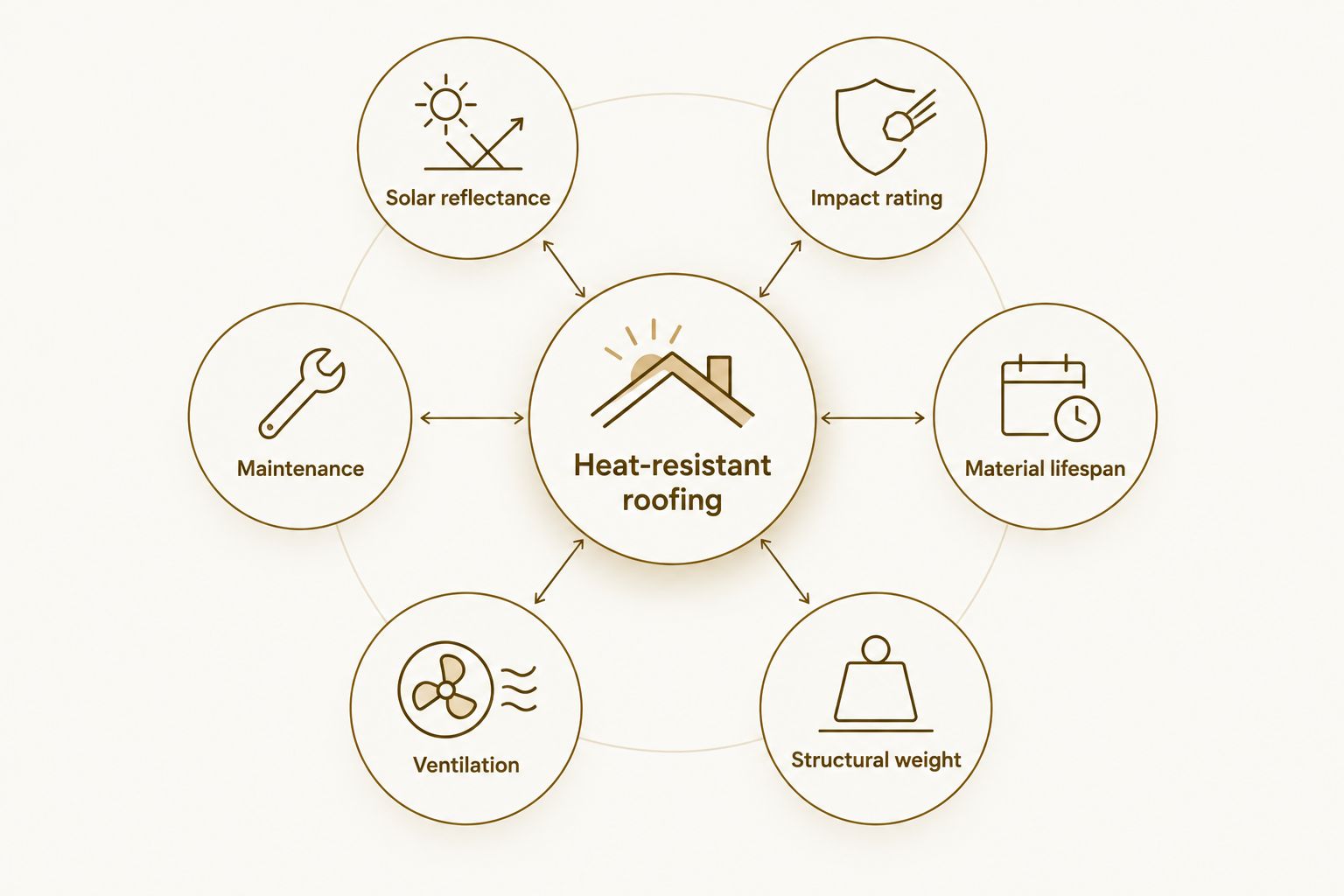
What makes the best roof for hot climates
- Solar reflectance — how much radiant heat the surface bounces back instead of absorbing into the deck
- Impact rating — UL 2218 classification, since hail is a recurring cost driver in Central Texas
- Material lifespan under heat cycling — expansion and contraction in 100°F+ summers and near-freezing winter nights
- Weight and structural compatibility — not every roof deck can carry tile without reinforcement
- Ventilation compatibility — attic airflow matters as much as the roof surface itself
- Maintenance frequency — how often the material needs attention to keep performing
At a glance: roof types for hot Texas climates
| Roof Type | Best For | Standout Feature | Key Limitation |
|---|---|---|---|
| Standing seam metal | Overall heat performance | High solar reflectance, 40-70 year lifespan | Higher upfront labor cost to install correctly |
| Clay/concrete tile | Spanish and Mediterranean-style homes | Thermal mass slows heat transfer indoors | Heavy — many decks need structural reinforcement |
| TPO single-ply membrane | Commercial flat roofs | Reflective white membrane, seam-welded | Seams need periodic inspection for wear |
| Class 4 impact-resistant shingles | Hail-prone neighborhoods | UL 2218 Class 4 rating resists cracking | Costs more than standard three-tab shingles |
| Cool/reflective asphalt shingles | Budget-conscious standard reroofs | Reflective granules cut attic heat gain | Shorter lifespan than metal or tile |
1. Standing seam metal roofing: best for overall heat performance
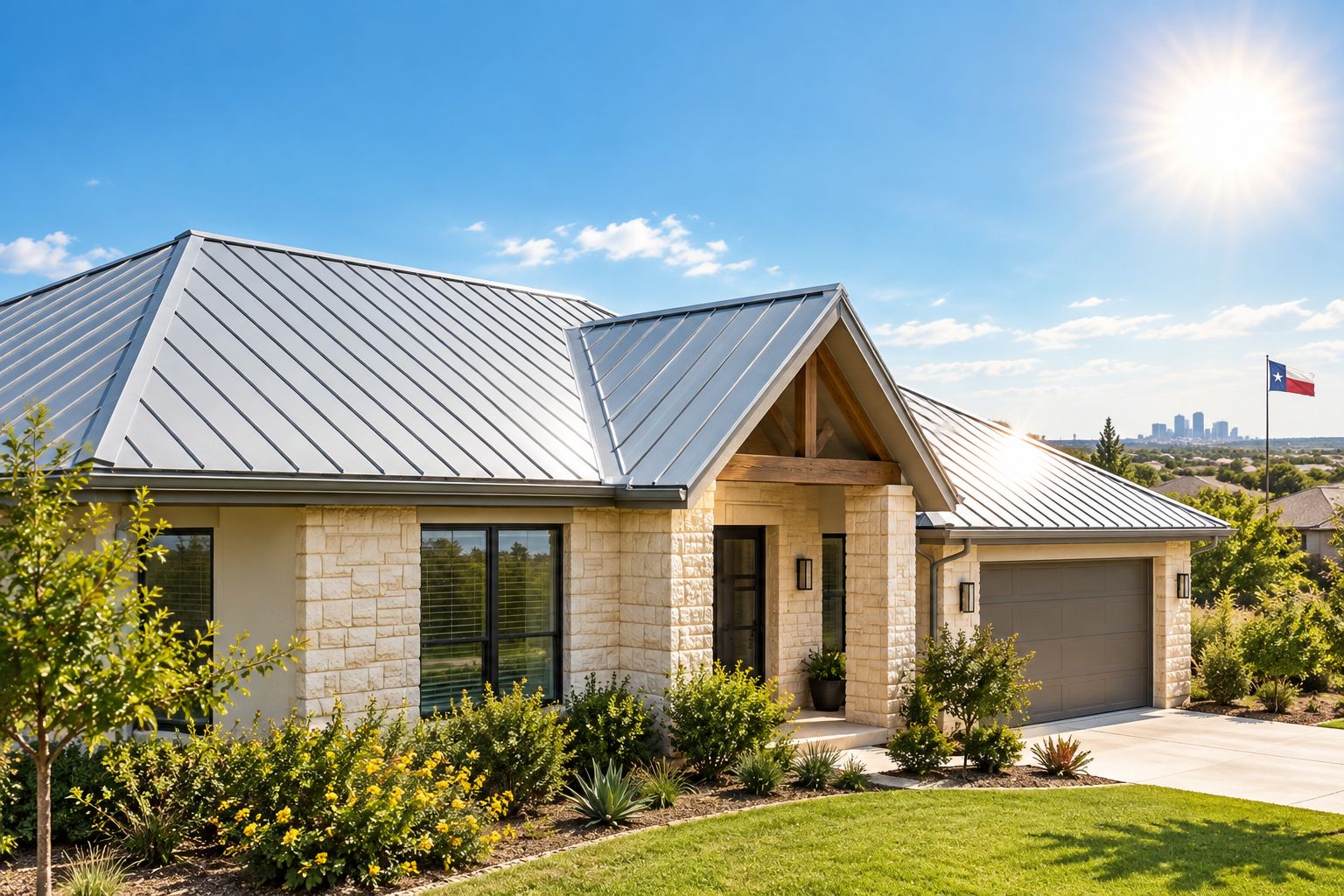
Standing seam metal panels run continuous, with raised seams that lock out water and no exposed fasteners for UV to degrade. In San Antomio's summer, the reflective coating bounces a large share of solar radiation instead of letting it soak into the deck.
The material holds up through repeated heat-expansion cycles better than most roofing products on the market, and a properly installed system runs 40 to 70 years before it needs replacement.
Standing seam metal pros:
- Reflects solar heat instead of absorbing it, easing attic temperatures
- 40-70 year expected service life
- Handles Texas hail better than standard asphalt in most panel gauges
- Low maintenance once installed correctly
Standing seam metal cons:
- Installation requires specialized labor and costs more upfront than shingles
- Can be noisy in heavy rain without proper underlayment
- Panel color and coating quality vary widely between manufacturers
Standing seam metal verdict: Buy — the strongest overall pick for a hot Texas climate when the budget supports it.
2. Clay and concrete tile: best for Spanish and Mediterranean-style homes
Tile roofing carries thermal mass — it absorbs heat slowly during the day and releases it slowly at night, which flattens out the temperature swing an attic experiences. That makes it a natural fit for the Spanish and Mediterranean-style architecture common across San Antonio's older neighborhoods.
Clay tile in particular has a track record of lasting 50 years or more when the underlayment underneath is replaced on schedule — the tile itself typically outlasts the waterproofing layer beneath it.
Clay/concrete tile pros:
- Thermal mass slows heat transfer into living space
- 50+ year lifespan for the tile itself
- Fire-resistant and holds up well against UV
- Matches architectural styles already common in the region
Clay/concrete tile cons:
- Heavy — many roof decks need engineering review or reinforcement before installation
- Individual tiles can crack under large hail impacts and need spot repair
- Underlayment replacement is a separate cost cycle from the tile itself
Clay/concrete tile verdict: Buy for homes with matching architecture and adequate structural framing. Hold if the deck hasn't been engineered for the added weight.
3. TPO single-ply membrane: best for commercial flat roofs
Commercial and multi-tenant buildings in San Antonio mostly run flat or low-slope roofs, and TPO (thermoplastic polyolefin) membrane is the standard reflective option for that category. The white or light-colored membrane is heat-welded at the seams, which keeps water out and reflects a large share of solar heat off a roof surface that otherwise absorbs it directly.
TPO membrane pros:
- Reflective surface reduces rooftop heat load on commercial buildings
- Heat-welded seams create a strong water barrier
- Lighter weight than built-up roofing systems
TPO membrane cons:
- Seams need periodic inspection — wear at seams is the most common failure point
- Punctures from foot traffic or rooftop equipment need prompt repair
- Not applicable to residential pitched roofs
TPO membrane verdict: Buy for commercial and flat-roof properties. Skip for standard pitched residential roofs — it's not built for that application.
4. Class 4 impact-resistant shingles: best for hail-prone neighborhoods
Central Texas sees hail regularly enough that impact resistance matters as much as heat performance for a lot of homeowners. Class 4 shingles carry the highest rating under the UL 2218 impact test, meaning they resist cracking and granule loss under hail impacts that would damage a standard three-tab shingle.
Class 4 shingle pros:
- Highest UL 2218 impact rating available in asphalt shingles
- Some insurers offer premium discounts for Class 4 roofing — worth confirming with your carrier
- Available with reflective granule options for added heat performance
Class 4 shingle cons:
- Costs more than standard architectural shingles
- Still an asphalt product — shorter lifespan than metal or tile
- Impact resistance varies by manufacturer; not all Class 4 products perform identically
Class 4 shingle verdict: Buy for neighborhoods with a documented hail history — the upgrade pays for itself the first time a storm rolls through.
5. Cool/reflective asphalt shingles: best budget option
Standard asphalt shingles remain the most common residential roofing material in Texas, and the reflective versions close a chunk of the heat-performance gap with pricier materials. Reflective granules on the shingle surface bounce back more solar radiation than a standard dark shingle, which can measurably reduce attic temperatures according to ENERGY STAR cool-roof data on reflective roofing products.
Cool/reflective shingle pros:
- Lower material cost than metal, tile, or Class 4 upgrades
- Reflective granules reduce roof surface temperature versus standard dark shingles
- Widely available and familiar to most roofing crews
Cool/reflective shingle cons:
- Shorter lifespan than metal or tile — typically 20 to 30 years
- Less impact-resistant than Class 4 products in hail events
- Granule loss over time reduces reflectance benefit
Cool/reflective shingle verdict: Buy for budget-conscious homeowners doing a standard reroof who still want a heat-performance upgrade over basic shingles.
Get a roof inspection before you decide
Eagle Eye documents the roof before recommending a material.
How we ranked these roof types
Each roof type above was weighed against the six criteria listed earlier: solar reflectance, impact rating, lifespan under heat cycling, structural weight, ventilation compatibility, and maintenance frequency. Standing seam metal scored highest across the most criteria for a typical San Antonio home, which is why it takes the overall spot; the other four options each win a specific use case where they outperform metal on cost, architecture fit, or building type.
Cost is part of the decision too — if you're weighing a full reroof against a repair, the roof replacement cost breakdown for San Antonio walks through what drives the price difference between these materials in 2026.
Which roof should you choose?
If you're reroofing a standard single-family home and can afford the upfront cost, standing seam metal roofing is the 2026 default — it reflects the most heat, lasts the longest, and needs the least maintenance. If hail is the bigger risk in your neighborhood, move to Class 4 impact-resistant shingles instead. If you're on a tighter budget, cool/reflective asphalt shingles still buy you a real heat-performance upgrade over standard shingles without the metal price tag.
FAQ
What is the best roof type for hot climates in 2026?
Standing seam metal roofing is the best overall roof type for hot climates in 2026 because of its high solar reflectance and 40-70 year lifespan. Clay tile and Class 4 shingles are strong alternatives depending on architecture and hail exposure.
Is metal roofing better than shingles in Texas heat?
Metal roofing outperforms standard asphalt shingles on heat reflection and lifespan in Texas heat. Shingles remain the lower-cost option and reflective shingle versions close part of the performance gap.
Does a light-colored roof really keep a house cooler?
Yes — reflective, light-colored roofing surfaces bounce back more solar radiation than dark roofing, which lowers roof surface temperature according to ENERGY STAR cool-roof data. That translates into a cooler attic and less strain on cooling systems.
What roof type holds up best against Texas hail?
Class 4 impact-resistant asphalt shingles, rated under UL 2218, hold up best against hail among common residential roofing options. Standing seam metal also performs well against hail depending on panel gauge.
Is clay tile roofing worth it in San Antonio?
Clay tile is worth it for Spanish and Mediterranean-style homes where the roof deck can support the added weight. It offers a 50+ year lifespan and slows heat transfer through thermal mass, but individual tiles can crack under large hail.
What roof do commercial buildings use in hot Texas climates?
Most commercial and multi-tenant buildings in San Antonio use TPO single-ply membrane on flat or low-slope roofs. The reflective membrane reduces rooftop heat load and is heat-welded at the seams for water resistance.
How long does a metal roof last in Texas heat?
A properly installed standing seam metal roof typically lasts 40 to 70 years in Texas heat, well beyond the 20-30 year range of standard asphalt shingles.
One last thing
The roof material matters less than the installation and the deck condition underneath it — a Class 4 shingle installed over a compromised deck fails the same way a cheap shingle does. Get the roof inspected and documented before committing to a material, not after the estimate arrives.
Related: see current roof replacement cost factors for San Antomio homes before you lock in a roofing type for 2026.