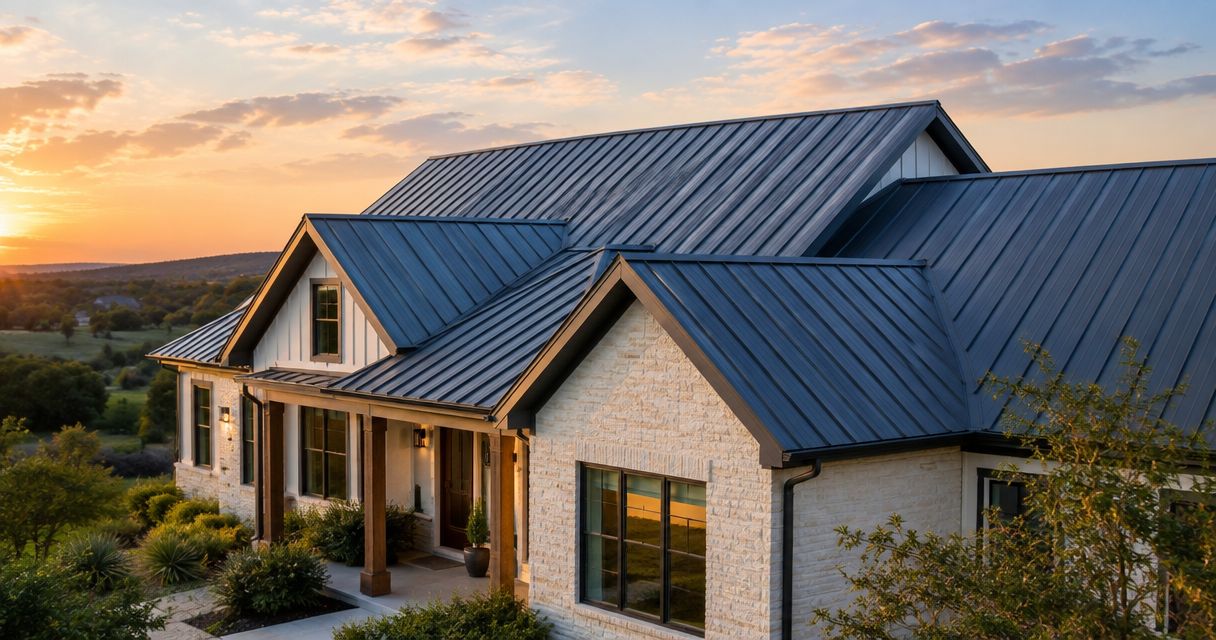
Standing seam metal roofing is the best overall pick for Texas homes in 2026. Best for hail-heavy regions like San Antonio: standing seam with a UL 2218 Class 4 rating. Best for HOA-restricted neighborhoods: stone-coated steel. Best budget option: corrugated R-panel exposed-fastener roofing.
- Standing seam metal roofing is the best metal roofing for Texas homes needing hail and wind protection in 2026.
- Stone-coated steel and metal shingles pass architectural review in HOA neighborhoods without giving up steel durability.
- Corrugated R-panel roofing is the lowest-cost metal option but needs its exposed fasteners re-torqued over time.
- A UL 2218 Class 4 hail rating and concealed fasteners matter more than color or brand when comparing panels.
- 5V-crimp panels suit barns and workshops better than a primary residence roof.
Why this matters
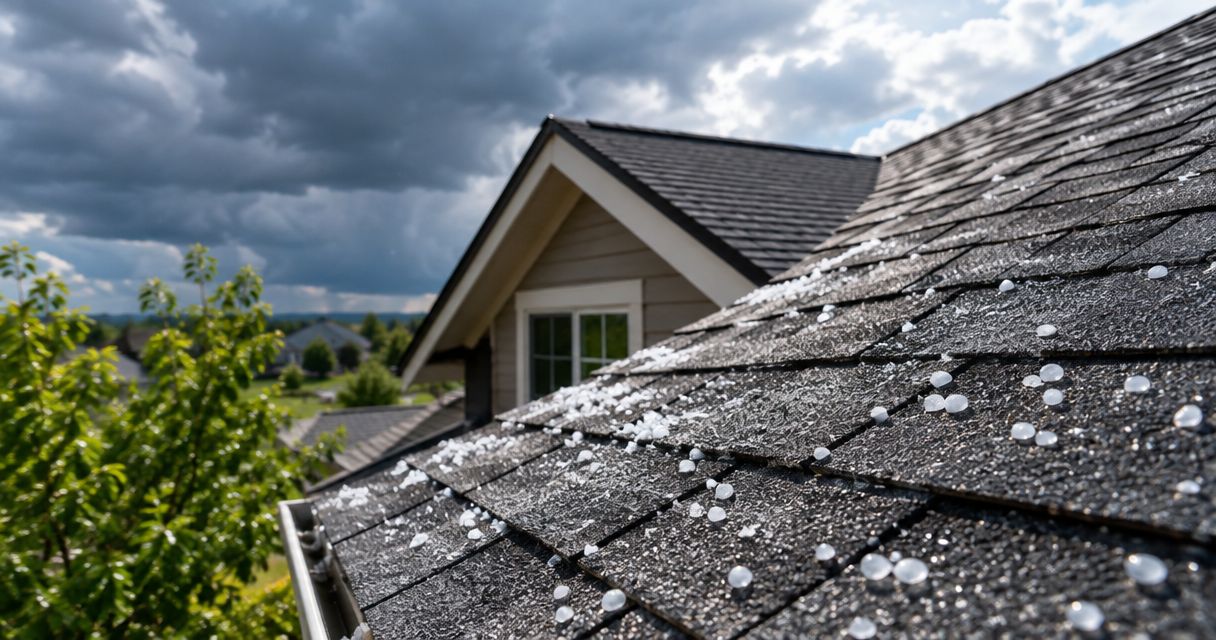
San Antonio sits inside Texas's hail corridor, and roofing decisions made here in 2026 get tested by storms most other states never see. A roof that survives a Midwest winter isn't automatically built for a Hill Country hailstorm or a summer wind event.
The metal panel you choose changes how the roof performs under impact, how much it costs to maintain, and whether your neighborhood's HOA even approves it. Before comparing options, it helps to see how metal stacks up against roofing materials for San Antonio homes overall — asphalt, tile, and metal all behave differently once hail and heat get involved.
Eagle Eye Roofing inspects and documents roof condition before recommending a metal system, because the right panel depends on your roof's slope, your HOA rules, and your wind exposure — not on which product is trending.
What makes the best metal roofing for Texas homes
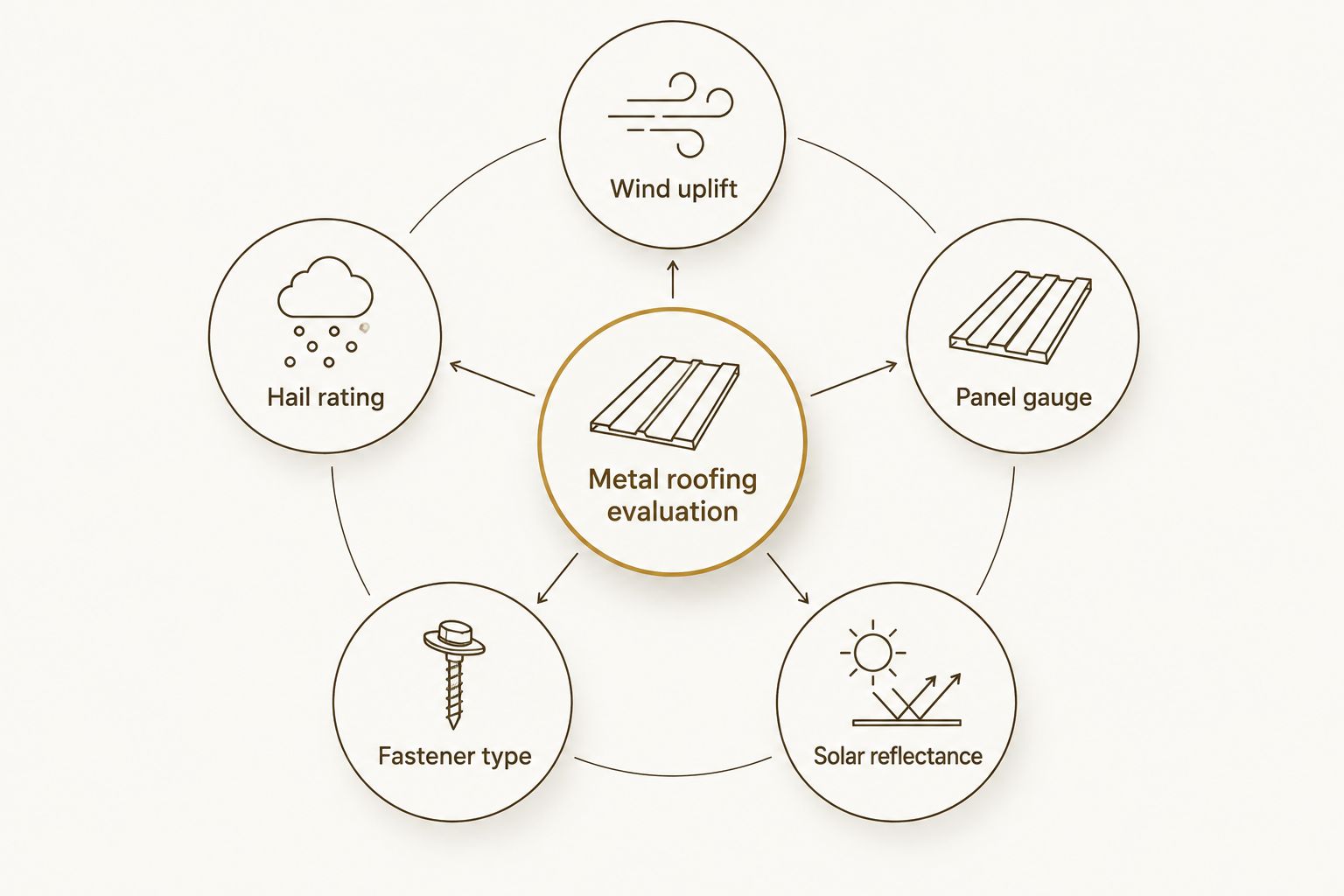
Before looking at the ranking, know what separates a panel built for Texas storms from one that just looks the part:
- Wind uplift rating — the panel and fastening system must meet local building code wind-load requirements
- Hail impact rating (UL 2218 Class 4) — resistance to simulated hail impacts up to 2 inches
- Panel gauge — thicker steel (lower gauge number) holds up better under repeated hail strikes
- Fastener system — concealed clips resist wind-driven rain better than exposed screws
- Solar reflectance — reflective coatings cut attic heat gain during Texas summers
- HOA and code compliance — not every metal profile is approved in every deed-restricted neighborhood
Best metal roofing for Texas homes at a glance
| Metal Roofing Type | Best For | Standout Feature | Key Limitation |
|---|---|---|---|
| Standing Seam | Hail-prone areas, long-term storm protection | Concealed fasteners, high wind uplift resistance | Highest install complexity |
| Stone-Coated Steel | HOA neighborhoods wanting a shingle or tile look | Mimics shakes or tile in lightweight steel | Interlocking profile needs an experienced crew |
| Metal Shingles | Historic or traditional-style homes | Traditional curb appeal with steel durability | Fewer color and profile choices than standing seam |
| Corrugated / R-Panel | Budget-conscious ranch and rural properties | Lowest installed cost among metal options | Exposed screws need periodic re-torquing |
| 5V-Crimp Panel | Barns, workshops, accessory structures | Simple panel shape, fast install | Less refined look for a primary residence |
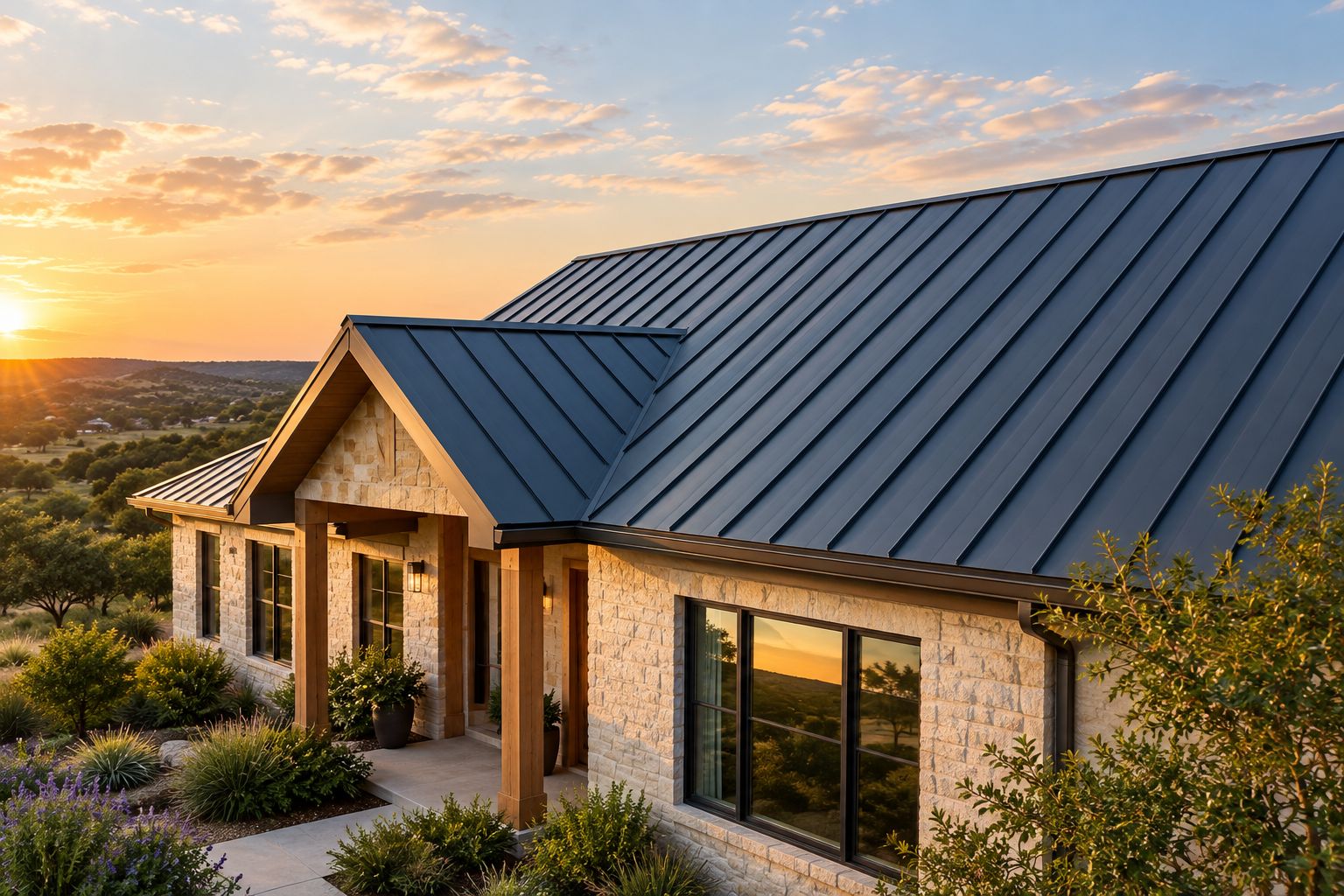
1. Standing seam metal roofing: best for hail-prone Texas properties
Standing seam panels lock together with raised, concealed seams and hidden fasteners, which is why they carry the highest wind uplift ratings among residential metal roofing options in 2026. The panel field never gets punctured by exposed screws, so there's nothing for wind-driven rain to work loose over time.
Standing seam pros:
- Concealed fastener system holds up under repeated wind events
- Available in 24-gauge steel with UL 2218 Class 4 hail ratings
- 30-year-plus service life when installed correctly
- Reflective coatings available to cut summer attic heat
Standing seam cons:
- Requires precise seaming equipment and an experienced installation crew
- Higher labor complexity than exposed-fastener panels
- Panel replacement after localized damage is harder than swapping a shingle
Best for: homeowners in hail corridors who want the longest service interval between roof replacements.
Verdict: Buy — the strongest option on this list for San Antonio's storm exposure.
2. Stone-coated steel roofing: best for HOA-restricted neighborhoods
Stone-coated steel panels are pressed to mimic wood shakes, clay tile, or slate, then coated with a stone-chip finish that holds paint and texture. Homeowners in deed-restricted subdivisions choose it because it clears architectural review boards that reject flat metal panels on sight.
Stone-coated steel pros:
- Passes HOA architectural review more often than exposed-panel metal
- Interlocking profile hides fasteners similarly to standing seam
- Lightweight compared to actual tile, reducing structural load concerns
- Holds color and texture well against UV exposure
Stone-coated steel cons:
- Costs more to source than plain corrugated panel
- Interlocking installation demands a crew familiar with the specific profile
- Repairs to the stone-chip coating are more visible than bare metal touch-ups
Best for: homeowners who need architectural approval and want steel's durability without an obviously industrial look.
Verdict: Buy for HOA properties, Hold if your neighborhood already allows standing seam.
3. Metal shingles: best for historic and traditional-style homes
Metal shingles are interlocking panels stamped to resemble individual shakes or slate tiles rather than long vertical runs. They give a period-appropriate look to older homes and historic districts where a modern standing seam profile would look out of place.
Metal shingle pros:
- Traditional shingle appearance with steel's storm resistance underneath
- Individual panel sections simplify partial repairs after localized damage
- Concealed fastening on most product lines
Metal shingle cons:
- Fewer color and profile combinations than standing seam or stone-coated steel
- Seam count is higher than standing seam, adding potential leak points if installed poorly
Best for: period homes and historic-district properties where architectural style is fixed by neighborhood guidelines.
Verdict: Hold — solid choice when style rules dictate the look, otherwise standing seam outperforms it.
4. Corrugated / R-panel exposed-fastener roofing: best budget metal option
Corrugated and R-panel roofing use through-screw fasteners driven directly into the panel ridges, which keeps the material and labor cost lower than any concealed-fastener system. It's common on outbuildings, barns, and increasingly on ranch-style Hill Country homes where the exposed-fastener look fits the property.
R-panel pros:
- Lowest installed cost among the metal options covered here
- Fast to install, cutting labor hours
- Simple, repeatable repair process if a panel is damaged
R-panel cons:
- Exposed screws loosen over years of thermal cycling and need re-torquing
- Fastener washers degrade before the panel itself does
- Lower wind uplift rating than concealed-fastener systems
Best for: rural and ranch-style properties where budget matters more than a concealed-fastener finish.
Verdict: Buy for outbuildings and budget-driven residential jobs, Wait if hail frequency in your area is high.
5. 5V-crimp panel roofing: best for barns and accessory structures
5V-crimp panels have a simple crimped edge profile that's been standard on Texas barns and workshops for decades. It installs fast and is widely available, but it's an exposed-fastener system like R-panel, just with a different edge shape.
5V-crimp pros:
- Familiar, widely stocked panel profile
- Fast installation on simple roof geometries
- Lower material cost than concealed-fastener systems
5V-crimp cons:
- Exposed fasteners carry the same long-term maintenance need as R-panel
- Less refined appearance for a primary residence
Best for: barns, workshops, and accessory structures rather than the main house.
Verdict: Skip for a primary residence roof, Buy for outbuildings.
“If a metal roof doesn't carry a UL 2218 Class 4 hail rating, it isn't built for San Antonio storms.”
How we ranked these
The ranking above weighs the same six criteria listed earlier: wind uplift rating, UL 2218 hail rating, panel gauge, fastener system, solar reflectance, and HOA or code compliance. Standing seam wins overall because it scores well on all six; the lower-ranked options each trade one or more of those factors for lower cost or a specific aesthetic. Eagle Eye Roofing applies the same inspect-document-plan approach to metal roofing that it uses on every job, matching the panel to the roof's slope, wind exposure, and neighborhood rules before recommending a system.
Which metal roofing should you choose?
For most Texas homeowners weighing storm protection against cost in 2026, standing seam metal roofing is the default choice — it clears the highest wind and hail thresholds on this list. If your HOA won't approve a flat metal profile, stone-coated steel or metal shingles get you steel's durability inside the architectural rules. If the roof in question is a barn, shop, or the budget is the deciding factor, corrugated R-panel or 5V-crimp gets the job done at a lower install cost.
Get your roof inspected first
Eagle Eye documents roof condition before recommending a metal system.
FAQ
What is the best metal roofing for Texas homes in 2026?
Standing seam metal roofing is the best overall option for Texas homes in 2026 because its concealed fasteners and high wind uplift rating hold up best against hail and storm-force wind. Stone-coated steel and metal shingles are better fits when an HOA requires a traditional look.
Is metal roofing better than shingles in Texas?
Metal roofing generally outlasts asphalt shingles and handles hail impact better when it carries a UL 2218 Class 4 rating. Shingles remain cheaper upfront, which is why the choice often comes down to storm exposure versus initial cost.
Does metal roofing pass HOA approval in Texas neighborhoods?
Stone-coated steel and metal shingles pass HOA architectural review more consistently than standing seam or exposed-fastener panels because they mimic traditional shake, tile, or shingle profiles. Check your specific HOA's roofing guidelines before ordering materials.
How long does a standing seam metal roof last in Texas?
A properly installed standing seam metal roof commonly lasts 30 years or more in Texas conditions. Service life depends on panel gauge, coating quality, and installation accuracy at the seams and flashing points.
What hail rating should Texas metal roofing have?
Look for a UL 2218 Class 4 impact rating, which is the highest tier and indicates the panel resisted simulated hail impacts up to 2 inches without cracking. Lower classes offer less protection against San Antonio's hail events.
Is corrugated metal roofing good for a house or just barns?
Corrugated and R-panel roofing works on houses, particularly ranch-style properties, but its exposed fasteners need periodic re-torquing that standing seam doesn't require. It remains most common on barns, workshops, and budget-driven residential jobs.
Why does fastener type matter on a metal roof?
Concealed fasteners, used on standing seam and most stone-coated steel systems, keep screws out of the weather path and resist wind-driven rain better. Exposed fasteners cost less upfront but loosen over years of thermal expansion and contraction.
One last thing
Panel gauge gets overlooked more than any other spec on this list — a 29-gauge panel and a 24-gauge panel can look identical in a photo but perform very differently under a two-inch hailstone. Ask for the gauge number in writing before signing any metal roofing contract in 2026, not just the panel style name.