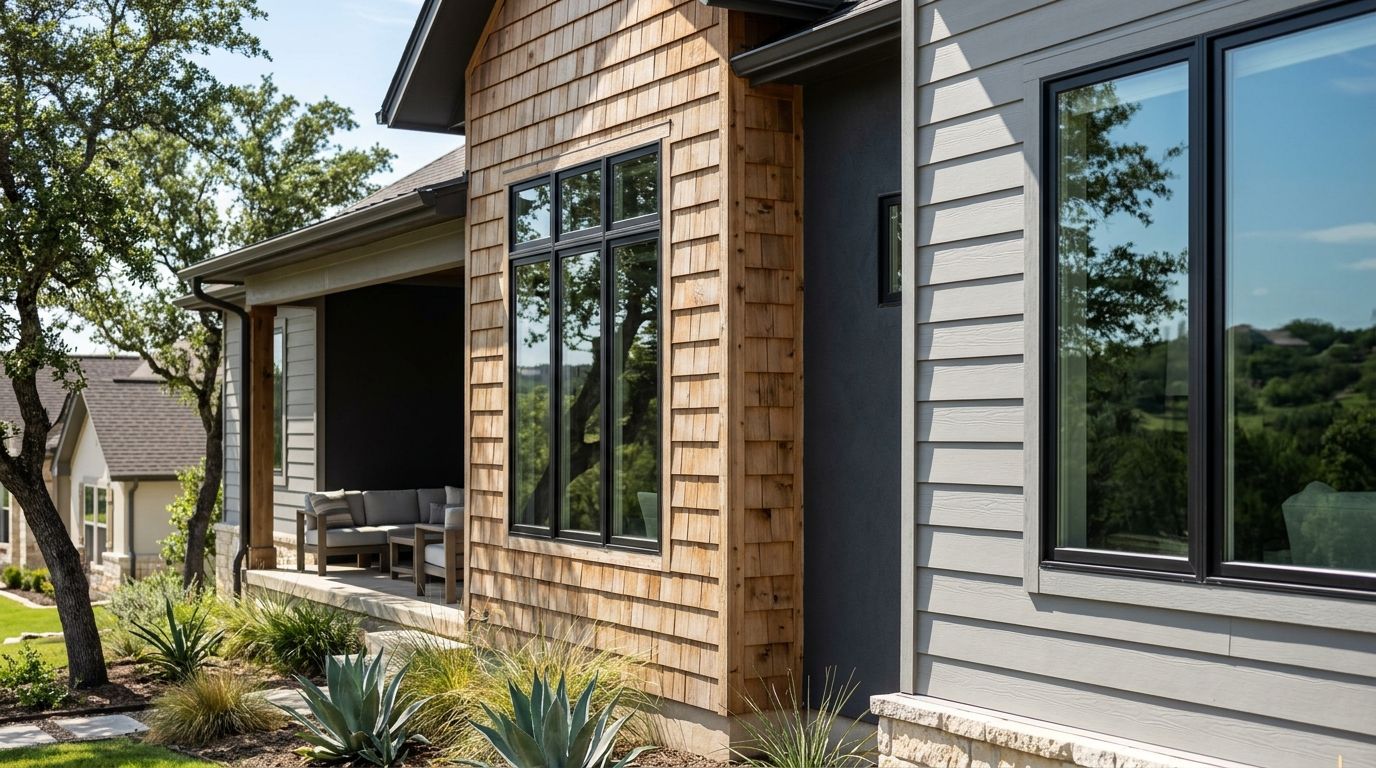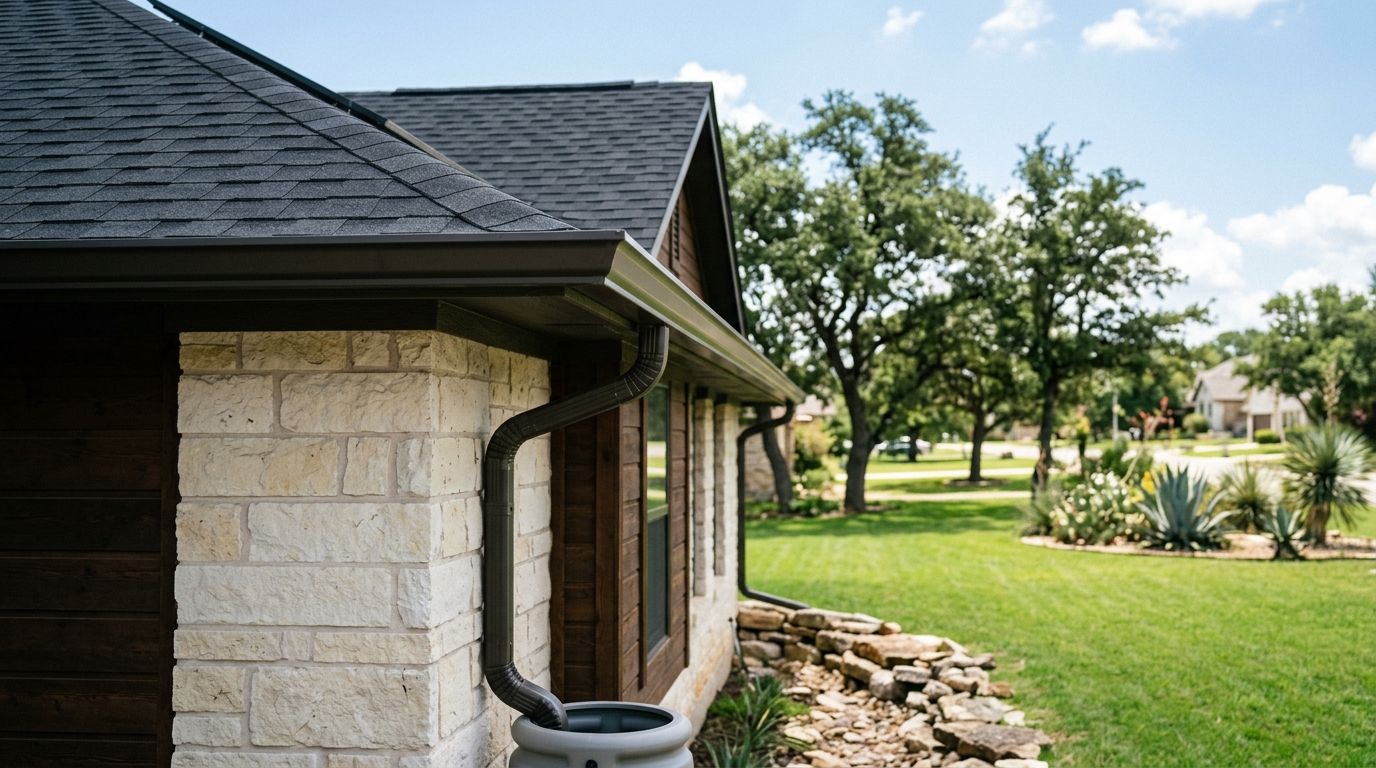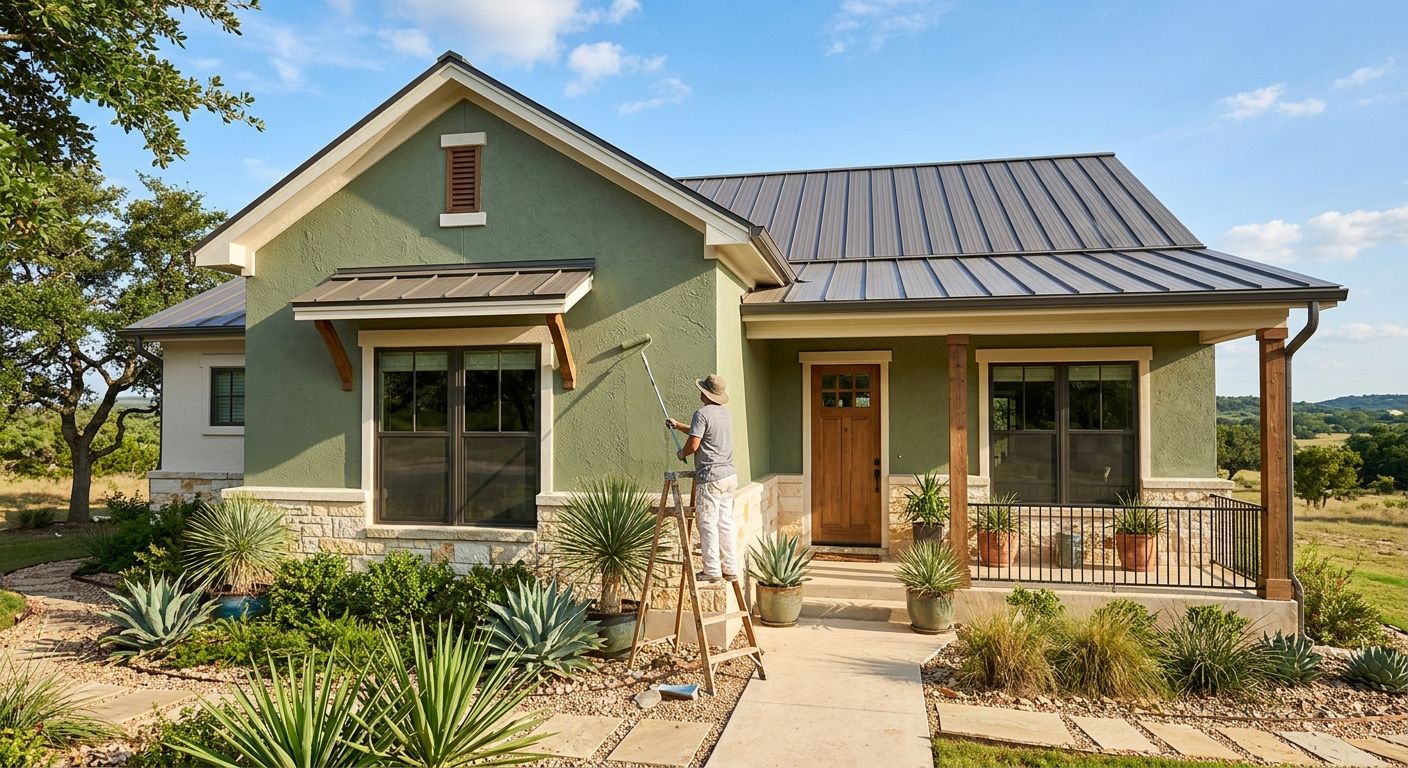
Best overall: 100% acrylic exterior paint for properly prepared siding. Best for sound stucco with hairline cracks: an elastomeric coating approved for that surface. Best for prepared metal trim: an exterior acrylic direct-to-metal coating. The best exterior paint for Texas climate depends first on what you are painting, then on whether heat, moisture or existing damage will defeat the finish.
- Best exterior paint for Texas climate: choose 100% acrylic for properly prepared siding.
- Use elastomeric coating on sound stucco only when the product and substrate are compatible.
- Choose a suitable mineral masonry coating when an unpainted masonry wall needs vapor permeability.
- Fix leaks and trapped moisture before painting; a new coating does not repair their source.
Why this matters in San Antonio
A sun-exposed wall, a shaded stucco wall and a metal fascia board do not ask the same thing of a coating. Surface condition matters just as much as climate: paint applied over loose material, wet masonry or an active leak has a weak foundation regardless of the label on the can.
For homeowners assessing staining near a roofline, Eagle Eye Roofing & Contracting Services provides roof repair, replacement and storm damage restoration in San Antonio. Its roofing work is relevant when water is reaching a wall from above; it is not a reason to assume the company provides painting services. Identify and address the water source before paying for a new finish.
The 2026 rule is simple: match the coating to a dry, sound substrate—not just to the Texas forecast. That rule separates a useful paint choice from a cosmetic cover-up.
What makes the best exterior paint for Texas climate
Use these criteria before comparing coating types. A product that fails the first two checks is not the right choice, even if its other features sound attractive.
- Substrate fit: Confirm the label names the actual surface: siding, stucco, brick, previously painted masonry or metal. These are not interchangeable.
- Existing coating: Identify what is already on the wall and whether it is firmly attached. A new finish cannot secure peeling paint underneath it.
- Moisture path: Check for leaks, damp spots, failed joints and water entering from the roof or flashing. Coating over an unresolved water path hides the symptom.
- Sun exposure: Choose an exterior-rated finish and follow its surface-temperature and application instructions. A wall in direct sun can be a different application surface from one in shade.
- Movement and cracking: Separate a stable surface with fine cracks from an actively moving or damaged one. A flexible coating is not a structural repair.
- Preparation requirements: Read the label for cleaning, primer, compatible previous coatings and drying conditions. The right paint over the wrong preparation is still the wrong system.
For a 2026 project, record the surface type and its condition before requesting a coating recommendation. That gives a supplier or painter something specific to assess instead of asking for a single paint that supposedly fits every Texas building.
Exterior paint choices at a glance
| Coating type | Best for | Standout feature | Key limitation |
|---|---|---|---|
| 100% acrylic exterior paint | Sound, prepared siding | Versatile exterior finish | Does not correct peeling paint or water damage |
| Elastomeric wall coating | Sound stucco with compatible hairline cracks | Flexible film | Can trap moisture if the wall or system is unsuitable |
| Mineral silicate masonry paint | Suitable unpainted mineral masonry | Vapor-permeable finish | Not a default choice over existing conventional paint |
| Acrylic direct-to-metal coating | Prepared exterior metal trim | Metal-specific coating option | Surface preparation and product compatibility are critical |
These are coating types, not interchangeable brand recommendations. A metal fascia board needs a different assessment from the siding below it, and an unpainted masonry wall needs a different assessment from a previously coated one.
1. 100% acrylic exterior paint: best for prepared siding
Best for: sound exterior siding that needs a conventional painted finish. For most suitable, properly prepared siding, 100% acrylic exterior paint is the default choice in this 2026 comparison. Check the product label against the siding material, the existing coating and the required primer rather than treating the words exterior paint as proof of compatibility.
The condition of the old finish determines what happens next. Clean contamination, remove loose paint and address damaged material before coating. If paint is peeling around a window or beneath an eave, find out why; covering the edge does not make it sound.
100% acrylic exterior paint pros:
- Gives you a straightforward starting point for compatible siding.
- Comes in exterior formulations intended for exposed walls.
- Allows a specific product to be matched to the surface and existing finish.
100% acrylic exterior paint cons:
- Does not bridge significant cracks or repair failed siding.
- Cannot stop water entering behind the wall or from the roofline.
If you are comparing cans in 2026, use the technical instructions, not a broad climate claim on the front label. Confirm the application conditions, surface preparation and recoating directions for the exact product selected.
Verdict — Buy: Choose 100% acrylic exterior paint for compatible, dry and sound siding. Hold the job when moisture or loose material remains.
2. Elastomeric wall coating: best for sound stucco with hairline cracks
Best for: compatible, sound stucco with fine, stable surface cracks. Elastomeric wall coating forms a flexible film. That makes it a candidate where ordinary exterior paint is not the best match for a suitable stucco surface, but it does not make every crack a painting problem.
Inspect the cracks before selecting the coating. A crack associated with movement, water entry or damaged stucco needs diagnosis and repair; a thick finish should not conceal it. The wall assembly also has to manage moisture, and the coating must be approved for the substrate and existing finish.
Elastomeric wall coating pros:
- Provides a flexible coating option for compatible stucco.
- Can address suitable hairline surface cracks as part of an approved coating system.
- Keeps the decision focused on the wall condition rather than paint color alone.
Elastomeric wall coating cons:
- An unsuitable application can interfere with moisture leaving a wall.
- It does not fix structural movement, failed flashing or an active leak.
In 2026, ask whether the stucco is dry and sound, what is already painted on it and which preparation the coating manufacturer requires. Do not use a coating's flexibility as permission to skip crack inspection.
Verdict — Buy: Choose an approved elastomeric system for sound, compatible stucco with suitable hairline cracks. Skip it as a substitute for water or structural repairs.
3. Mineral silicate masonry paint: best for suitable unpainted masonry
Best for: appropriate unpainted mineral masonry where vapor movement matters. Mineral silicate paint is a distinct choice from a conventional acrylic wall paint. Its suitability depends on the masonry, its condition and whether previous coatings are present; read the specific product requirements before committing.
Start by identifying the wall. Brick, mortar, concrete and stucco can have different conditions, and the presence of old paint changes the question. If moisture is visibly affecting the wall, identify where it enters before choosing a vapor-permeable finish. Vapor permeability is not a cure for a leak.
Mineral silicate masonry paint pros:
- Gives suitable mineral masonry a coating option that allows vapor movement.
- Prompts an explicit check of masonry type and existing coatings.
- Avoids treating every masonry wall as ordinary siding.
Mineral silicate masonry paint cons:
- Is not a default over conventional existing paint.
- Requires close attention to substrate and preparation requirements.
For a 2026 masonry job, ask the coating supplier to confirm the exact wall material, prior treatments and required preparation. If those facts are unclear, postpone the coating choice until the wall has been assessed.
Verdict — Hold: Choose mineral silicate masonry paint only after confirming the masonry and existing finish are compatible. Do not specify it from a photograph alone.
4. Acrylic direct-to-metal coating: best for prepared metal trim
Best for: compatible exterior metal trim and details. An acrylic direct-to-metal coating belongs in this comparison because exposed metal is not siding. The product label determines which metals, surface conditions and preparation steps it covers; direct-to-metal is not permission to paint over corrosion or a loose existing finish.
Look first at the detail you want to coat. A fascia or other trim component can have paint failure linked to water reaching it from an adjacent roof or joint. Resolve that path before coating. Do not transfer a trim-coating recommendation to a metal roof without the roof system manufacturer's approval.
Acrylic direct-to-metal coating pros:
- Gives compatible metal details a coating selected for their substrate.
- Separates metal preparation from the siding-paint decision.
- Makes the existing finish and any corrosion part of the specification.
Acrylic direct-to-metal coating cons:
- Cannot restore metal that needs repair or replacement.
- Is not automatically suitable for every metal, prior finish or roof panel.
Verdict — Buy: Choose an acrylic direct-to-metal coating for compatible, properly prepared trim. Skip painting if the metal or the source of moisture needs repair first.
Inspect, document, plan, then paint
The coating decision comes after the surface decision. Use this sequence to keep a 2026 exterior project from starting with the wrong product.
- Inspect the substrate. Name each surface and mark peeling paint, cracks, rust, staining and soft or damaged material. Do not group the whole exterior under one paint specification.
- Document moisture. Note where staining begins and what sits above it: an opening, joint, gutter, flashing or roof edge. Staining is evidence to investigate, not a diagnosis by itself.
- Plan the repair. Address the cause of water entry and repair unsound material before selecting primer and finish. Ask for a written scope that separates repairs, preparation and coating work.
- Match the coating. Check the exact product instructions against the substrate, old finish and application conditions. Confirm any primer requirement before work starts.
- Complete and check. Follow the stated preparation and application directions. Inspect finished edges, repaired areas and previously stained locations rather than judging the job only from the street.
When roofline staining is part of the problem, keep the roof assessment separate from the paint specification. Eagle Eye Roofing & Contracting Services handles roof repair and storm damage restoration in San Antonio; a roofing scope can identify work that must happen before a wall is repainted. The painting scope still needs its own substrate and coating decisions.
Two checks that change the job
Check older painted surfaces before disturbing them. The U.S. Environmental Protection Agency's lead-safe renovation rules address work in pre-1978 homes and child-occupied facilities. If the building falls into that category, establish the applicable requirements before scraping, sanding or otherwise disturbing old paint. Do not infer lead content from appearance.
Plan access before working above ground level. OSHA guidance for portable ladders includes extending a ladder at least 3 feet above an upper landing when it is used for access. OSHA's placement guidance for a non-self-supporting ladder uses a setup distance of about 1 foot out for every 4 feet of working length. Ladder rules do not turn an unsafe painting position into a safe one; select appropriate access equipment for the work.
These checks do not change which coating wins for sound siding. They change whether the project is ready to start. In 2026, a clearly documented preparation and access plan is more useful than a paint choice made before anyone has examined the wall.
How these coating types were ranked
The ranking puts substrate fit first, followed by the consequences of a wrong choice. 100% acrylic exterior paint takes the default slot for compatible siding; the other coatings win narrower jobs. Elastomeric coating is for suitable stucco, mineral silicate paint is for suitable mineral masonry, and direct-to-metal acrylic is for compatible metal details.
Eagle Eye Roofing & Contracting Services is a roofing and contracting provider, not a paint brand in this ranking. Its relevant role is addressing roof and storm damage that can leave exterior surfaces wet. No coating earns a recommendation here by covering up an unresolved leak.
Which exterior paint should you choose?
Choose 100% acrylic exterior paint if you have sound, compatible siding and want the clearest default for a 2026 Texas exterior project. Choose an approved elastomeric system for suitable stucco with hairline surface cracks. Use a compatible mineral silicate coating for appropriate unpainted masonry, or a metal-specific acrylic coating for properly prepared metal trim.
If you cannot name the substrate or explain a stain, do not buy paint yet. Inspect the surface and document the water path first. That decision prevents a finish choice from getting ahead of the repair it depends on.
FAQ
What is the best exterior paint for Texas climate in 2026?
100% acrylic exterior paint is the best default for properly prepared, compatible siding. Stucco, mineral masonry and metal details require their own coating assessment.
Is elastomeric coating better than acrylic paint for Texas stucco?
Elastomeric coating is the better fit only for sound, compatible stucco when its flexible film addresses suitable hairline surface cracks. It does not repair movement, damaged stucco or water entry.
Can I paint over water stains on an exterior wall?
Identify and address the water source before painting over exterior staining. A new coating does not stop moisture entering from a roofline, joint or opening.
What paint should I use on unpainted brick?
Choose a coating only after confirming the brick, mortar and wall conditions are compatible with it. Mineral silicate masonry paint is an option for suitable unpainted mineral masonry, not a universal brick coating.
Can I use house paint on exterior metal trim?
Select a product whose label approves the specific metal and existing surface condition. A compatible acrylic direct-to-metal coating is an option after required preparation and any necessary repair.
Does exterior paint fix cracks in stucco?
Exterior paint does not repair damaged or moving stucco. Suitable hairline surface cracks can be considered when specifying a compatible elastomeric system, but their cause comes first.
Should a roof leak be repaired before exterior painting?
Yes, address an active roof leak before repainting affected exterior surfaces. Let the material dry and repair damaged areas before specifying the coating.
One last thing
The most useful question at a paint counter is not which can handles Texas heat. It is what surface is being coated, what is already on it and why any part of it failed. If staining starts beneath a roof edge, document that location before washing or repainting it. Eagle Eye Roofing & Contracting Services provides roof repair and storm restoration services in San Antonio when the roof is part of the problem; the finish decision follows the repair.