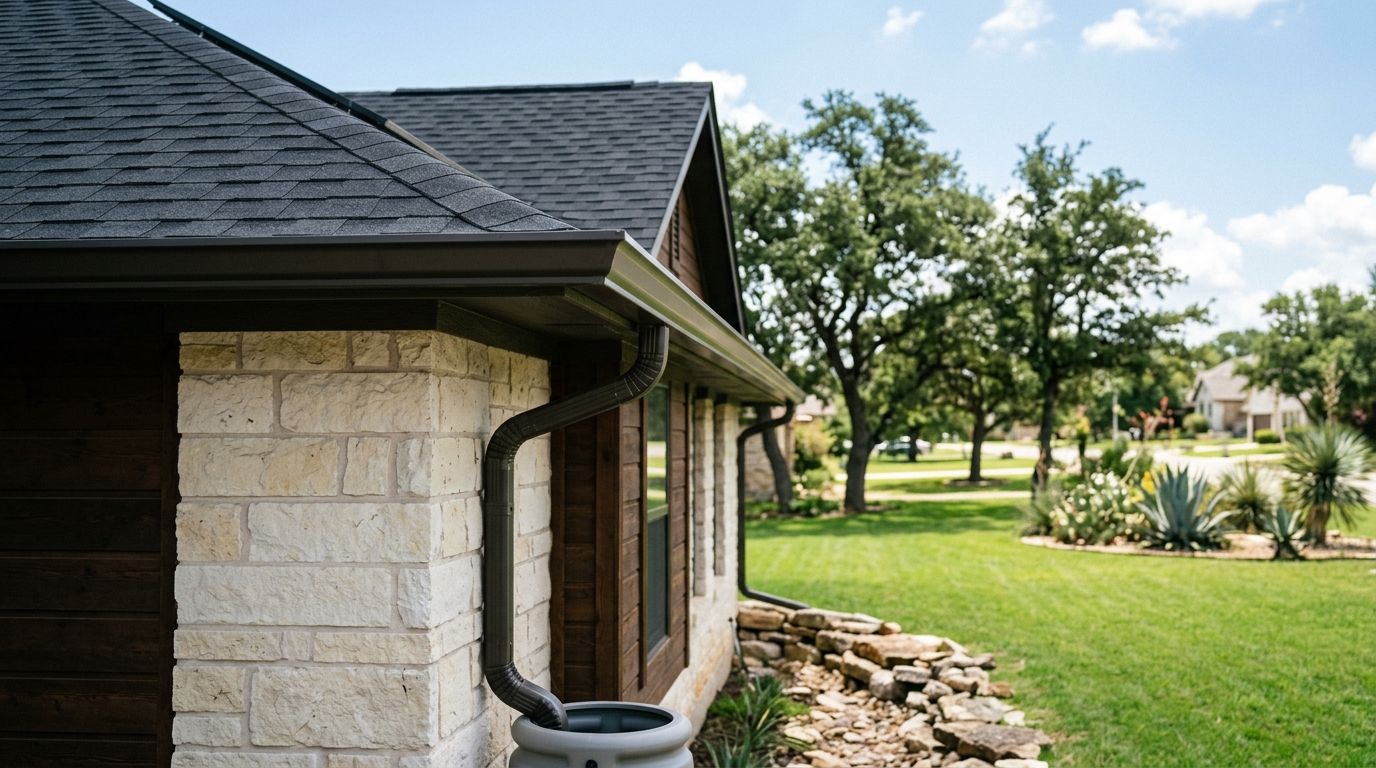
Best overall: 5-inch seamless aluminum K-style gutters for a typical Texas home. Best for concentrated roof runoff: a 6-inch seamless aluminum system sized with matching outlets and downspouts. Best for exposed gutters that face physical contact: galvanized steel K-style gutters, provided you keep the protective coating intact.
- Best gutter systems for Texas weather: 5-inch seamless aluminum K-style gutters are the default for most homes.
- Choose 6-inch seamless aluminum only when roof area and runoff paths justify the larger system.
- Galvanized steel suits exposed locations but needs coating maintenance; vinyl sectional gutters are a weaker permanent choice in Texas heat.
- Check roof-edge damage and the discharge route before selecting a gutter profile.
Why this matters
Texas gutters must carry sudden rain off the roof without sending it toward fascia, walls, or the foundation. A material choice alone cannot fix a downspout that empties beside the building or a low spot that holds water. The right system depends on the roof area feeding it, the outlets, and where the water goes after it leaves the downspout.
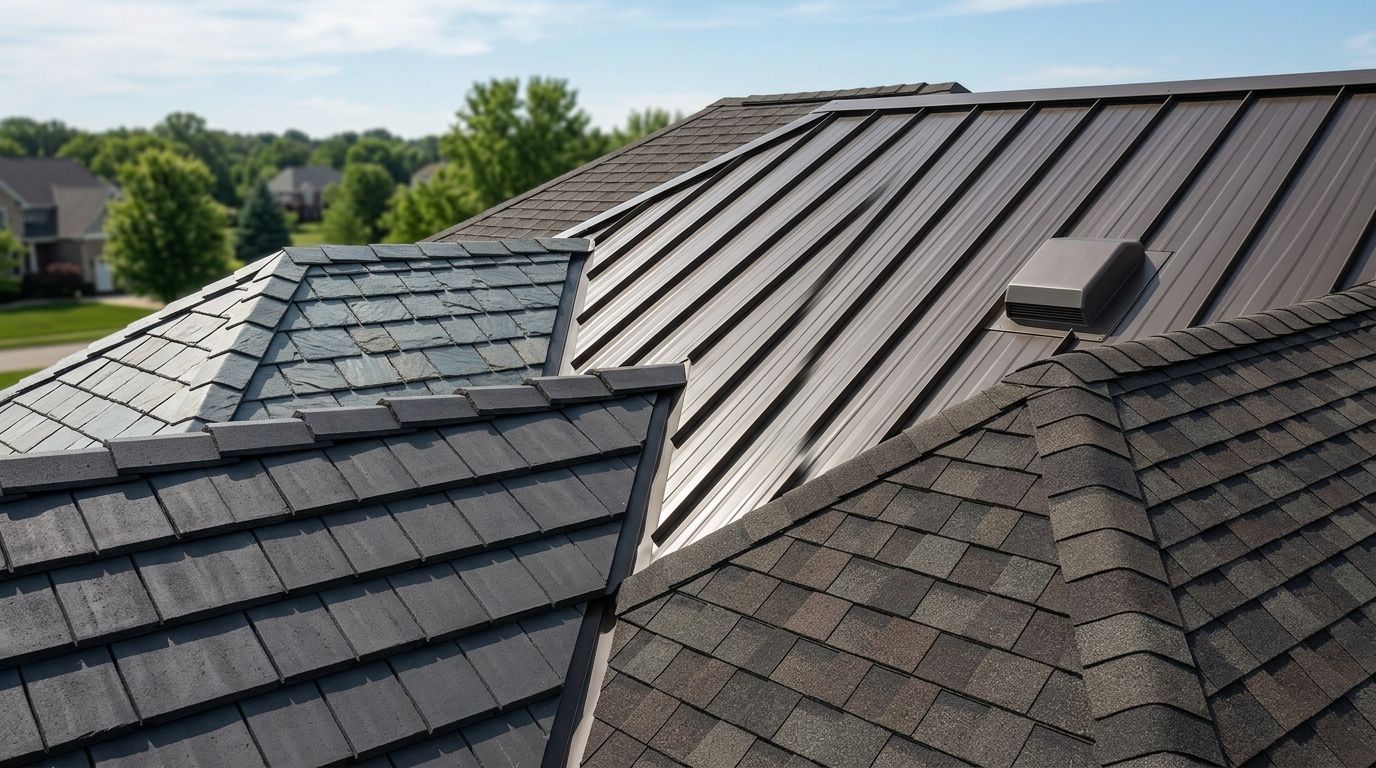
If gutter trouble appeared after a storm, check the roof edge as well as the gutter. Eagle Eye Roofing & Contracting Services provides roof repair and storm damage restoration to San Antonio homeowners and commercial property owners. A damaged roof edge calls for roof work, not just a new gutter.
This 2026 ranking compares gutter system types, not installation companies. It gives you a starting choice and the conditions that would change it.
What makes the best gutter system for Texas weather
Use these criteria before comparing finishes or profiles:
- Runoff capacity: Match the gutter, outlet, and downspout to the roof area draining into them. A wider trough alone does not clear a restricted outlet.
- Joint count: Seamless runs have fewer seams along straight roof edges than sectional gutters. Corners, end caps, and outlets still need sound connections.
- Material care: Aluminum avoids the coating-dependent rust risk of galvanized steel. Copper develops a patina; vinyl responds differently to heat and temperature changes.
- Roof-edge condition: Sound fascia and appropriate attachment matter. Replacing a gutter does not repair damaged wood or roof flashing behind it.
- Discharge route: The system must move water away from the building without creating a problem at a walkway, adjacent wall, or neighboring property.
The 2026 default is 5-inch seamless aluminum, not the largest gutter available. Confirm the size against the actual roof layout before installation. A valley or upper roof can concentrate water at one short section even when the rest of the roof edge looks straightforward.
Gutter systems at a glance
| System | Best for | Standout feature | Key limitation |
|---|---|---|---|
| 5-inch seamless aluminum K-style | Typical residential roof edges | Few seams along straight runs | Needs sizing checks where runoff concentrates |
| 6-inch seamless aluminum K-style | Roof areas with heavier concentrated runoff | Wider trough when the full drainage path supports it | Oversizing the trough does not fix a small outlet or poor discharge |
| Galvanized steel K-style | Exposed runs vulnerable to physical contact | Rigid metal construction | Scratches and cut edges need corrosion attention |
| Copper half-round | Visible rooflines where material appearance matters | Distinct profile that develops a patina | Material compatibility and installation details need care |
| Vinyl sectional | A small, accessible DIY project | Pieces assembled on site | More joints and greater exposure to heat-related movement |
The table is a decision guide, not a substitute for measuring roof planes and identifying each drainage point. In 2026, ask for a written scope that identifies the gutter size, outlet locations, downspouts, and discharge plan. If the scope lists only the gutter material, it leaves the most important drainage decisions open.
1. 5-inch seamless aluminum K-style: best for typical homes
A 5-inch seamless aluminum K-style system is the best starting point for many Texas homes with conventional roof edges. The long straight runs have fewer field joints than a sectional system, while the K-style profile fits a familiar residential roofline. Its usefulness still depends on the outlet, downspout, slope, and discharge location.
Do not treat the 5-inch label as proof that every section can handle the same runoff. Water from an upper roof or valley can arrive at one point faster than water spread across a straight eave. Have that area assessed separately rather than applying one size to the entire house by habit.
5-inch seamless aluminum pros:
- Fewer seams along straight runs mean fewer joint locations to inspect.
- Aluminum does not depend on a steel coating to resist rust.
- The system suits roof edges that do not need a larger drainage design.
5-inch seamless aluminum cons:
- A poorly placed or restricted outlet can still cause overflow.
- Concentrated runoff can require a different size or layout at a specific section.
- Dents, loose attachments, and clogged outlets still need maintenance.
Best for: Homeowners choosing a default system for a typical roof after runoff and discharge have been checked. Verdict: Buy when the roof layout supports the 5-inch size; change the specification where the drainage assessment shows a bottleneck.
2. 6-inch seamless aluminum K-style: best for concentrated runoff
A 6-inch seamless aluminum K-style gutter gives a roof edge a wider trough. It is a better candidate where a broad roof plane, valley, or upper roof sends water toward a limited length of gutter. The larger profile is useful only when outlets and downspouts are planned as part of the same system.
Ask where water enters the gutter during heavy rain and where it leaves. If runoff overshoots the gutter at a roof valley, simply increasing the trough width might not solve the entry point. If water reaches the gutter but backs up at the outlet, the outlet and downstream route deserve attention before the entire run is replaced.
6-inch seamless aluminum pros:
- Wider trough gives the installer another sizing option for demanding roof edges.
- Seamless straight runs limit the number of field joints.
- Aluminum avoids the coating-dependent rust concern of galvanized steel.
6-inch seamless aluminum cons:
- A larger gutter cannot correct an undersized or blocked outlet.
- The wider profile is unnecessary on roof sections that already drain correctly.
- Poor attachment or incorrect slope can undermine the larger system.
Best for: Roof sections where measured runoff and layout call for more capacity than a 5-inch system provides. Verdict: Buy for the problem section when the outlet, downspout, and discharge route are specified with it; hold if the proposed change is only a wider trough.
3. Galvanized steel K-style: best for exposed runs
Galvanized steel K-style gutters are a candidate where physical contact is a recurring concern, such as an accessible building edge. Steel offers a rigid construction, but the protective zinc coating is part of the system: damaged coating and cut edges require attention to limit corrosion. Installation details and access for inspection matter as much as the metal choice.
This is not the default pick for every Texas home. Choose it for a clearly identified exposure problem, then include coating condition and fastener areas in routine checks. If standing water persists, correct the slope or outlet rather than treating steel as a fix for drainage design.
Galvanized steel pros:
- Rigid metal suits locations where the gutter is exposed to physical contact.
- K-style construction works with a conventional roof-edge layout.
- The material provides an alternative when aluminum damage is the specific concern.
Galvanized steel cons:
- Scratches, cut edges, and failed coating need corrosion attention.
- The material does not prevent overflow caused by blocked outlets or poor sizing.
- Inspection is harder to neglect when the run is difficult to access.
Best for: Owners with an exposed gutter run and a plan to inspect coating condition. Verdict: Hold until the exposure problem is clear; otherwise, start with seamless aluminum and the correct drainage layout.
4. Copper half-round: best for a visible roofline
Copper half-round gutters make sense when the roofline's appearance is a primary part of the decision. Copper develops a patina over time, and the rounded profile looks different from K-style gutters. That visual choice does not remove the need to size the system for runoff or provide an effective outlet and downspout.
Pay particular attention to connections with other metals and to where copper runoff goes. Incompatible metal pairings can create corrosion problems, and the roof-edge details must suit the selected components. Request a specification that addresses those connections rather than accepting copper as a complete plan on its own.
Copper half-round pros:
- Distinct rounded profile suits a visible roof edge.
- Patina changes the material's appearance over time.
- Offers a clear material choice when appearance matters to the owner.
Copper half-round cons:
- Material compatibility needs deliberate detailing.
- A half-round profile is not a reason to skip runoff sizing.
- The appearance will change, which will not suit every owner.
Best for: Owners who prioritize a copper roof-edge appearance and will specify compatible components. Verdict: Hold until drainage sizing and metal connections are documented; choose it for that defined use, not as a blanket Texas-weather upgrade.
5. Vinyl sectional: best for a small DIY project
Vinyl sectional gutters are assembled from separate pieces rather than formed as long seamless runs. That makes them an option for a small, accessible DIY job. Each connection needs attention, and heat-related movement makes installation allowances and ongoing checks important in Texas.
For a permanent system on a house with complex runoff paths, vinyl is the weakest default in this ranking. More joints create more locations to examine when water escapes. A difficult-to-reach roof edge also removes much of the appeal of a system chosen for easy hands-on assembly.
Vinyl sectional pros:
- Sections can be handled and assembled without forming a continuous metal run.
- Individual pieces make sense for a limited, accessible project.
- The material avoids rust.
Vinyl sectional cons:
- Every joined section adds a connection that needs to stay sealed.
- Temperature-related movement needs room in the installation design.
- Complex rooflines make the sectional approach less appealing.
Best for: A small, accessible project where the owner can inspect the joints. Verdict: Skip as the default permanent choice for a Texas home with concentrated runoff or hard-to-access roof edges.
How to make the final choice
The ranking weighs runoff fit and the complete water path ahead of appearance or material preference. Start at the roof, follow the water, then choose the gutter. Eagle Eye Roofing & Contracting Services is relevant to this decision when roof repair or storm damage restoration is also needed; its stated services do not establish gutter installation as an offering.
Before approving a 2026 gutter scope, check these steps in order:
- Inspect roof edge: Identify damaged fascia, roof-edge materials, and storm damage before covering the area with a new gutter.
- Trace runoff: Note roof valleys, upper roof sections, and spots where water concentrates or overshoots.
- Size outlets: Specify the gutter and its outlets as one drainage path, not separate purchases.
- Check slope: Confirm that each run directs water toward its planned outlet without holding water.
- Plan discharge: Identify where every downspout empties and whether that route keeps water away from the building.
A written scope should identify who addresses roof-edge repairs if the inspection finds damage. Otherwise, the gutter crew and roofing contractor can each assume the other is handling the same problem.
The sequence also keeps a gutter recommendation tied to the property rather than a standard package. If water is entering behind the gutter, investigate the roof edge. If it is spilling over a clear gutter at one point, investigate concentrated runoff and outlet placement. Those are different repairs.
Which gutter system should you choose?
Choose 5-inch seamless aluminum K-style gutters unless the roof's runoff assessment calls for another design. Move to 6-inch seamless aluminum where concentrated flow and the full outlet-to-discharge path justify it. Choose galvanized steel for a defined physical-exposure concern, copper half-round for a specified appearance, or vinyl sectional for a limited, accessible DIY job.
Do not let the 2026 ranking turn into a whole-house size rule. One side of a house can need a different drainage layout from another. Where storm damage affects both roof and gutter, settle the roof-edge repair scope before the new gutter is attached. Eagle Eye Roofing & Contracting Services provides roof repair and storm damage restoration in San Antonio; confirm the gutter work separately with the contractor proposing it.
FAQ
What are the best gutter systems for Texas weather in 2026?
A 5-inch seamless aluminum K-style system is the best starting choice for a typical Texas home. Concentrated runoff can justify a 6-inch system when the outlets, downspouts, and discharge route are sized with it.
Are 6-inch gutters better than 5-inch gutters in Texas?
6-inch gutters are better only where the roof layout and runoff call for the wider trough. A larger gutter cannot fix a blocked outlet, poor slope, or discharge beside the building.
Is aluminum or galvanized steel better for Texas gutters?
Seamless aluminum is the better default for a typical home; galvanized steel is a candidate for an exposed run vulnerable to physical contact. Steel's protective coating and cut edges need inspection for corrosion.
Are vinyl gutters a good choice in Texas heat?
Vinyl sectional gutters suit a small, accessible DIY project better than a complex permanent installation. Their joints and temperature-related movement need regular attention.
Do seamless gutters eliminate leaks?
No, seamless gutters reduce joints along straight runs but still have corners, end caps, and outlets. Those connections need proper installation and inspection.
Should roof damage be repaired before new gutters are installed?
Yes, identify and scope roof-edge or fascia damage before attaching a new gutter over it. Eagle Eye Roofing & Contracting Services handles roof repair and storm damage restoration for San Antonio property owners.
How do I know whether a gutter is too small?
Start by locating where water escapes during rain and checking for clogs, poor slope, and restricted outlets. If a clear, properly sloped system still overflows where roof runoff concentrates, have the drainage path sized before choosing a replacement.
One last thing
A gutter can look large enough from the ground and still fail at the smallest point in its drainage path. In 2026, require the proposal to show where each downspout sends water. That one detail helps you distinguish a complete drainage plan from a material swap. If the roof edge also needs work, address it before the gutter hides the damage.