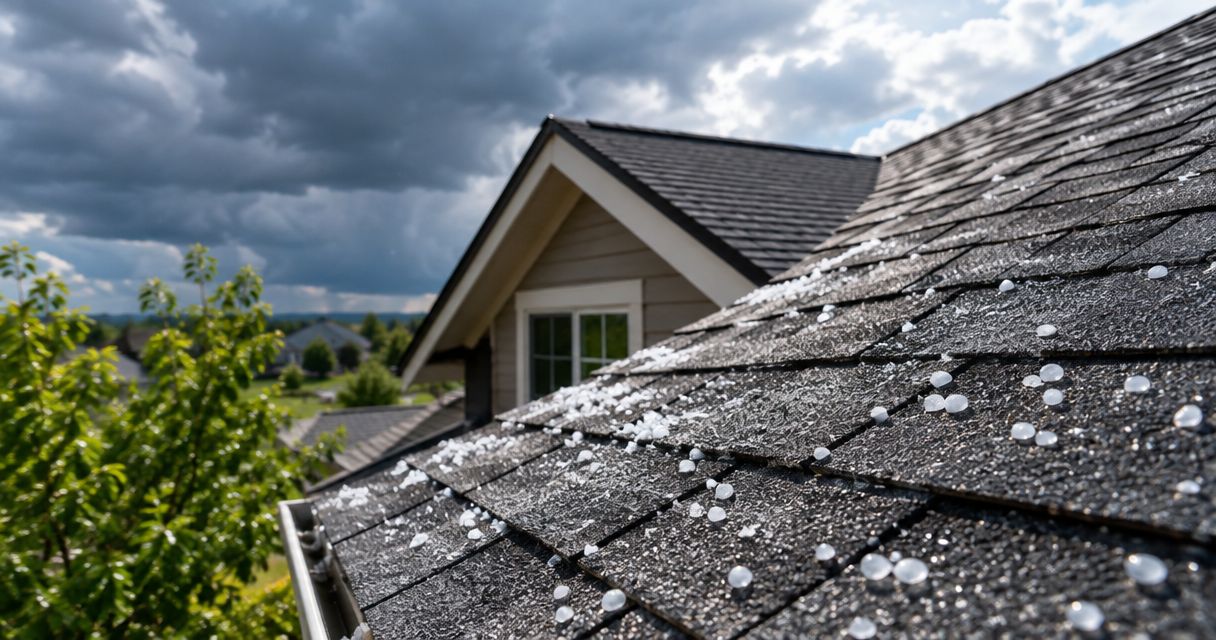
Commercial flat roofs in San Antonio take a beating from 100-degree summer heat, sudden hailstorms, and UV exposure that never really lets up. Picking the wrong membrane means a re-roof in 10 years instead of 20 or 30 — here's how the six main flat roof systems stack up for 2026 commercial projects.
- TPO is the best overall flat roof system for commercial buildings in San Antonio's heat and UV exposure.
- PVC membrane wins for restaurants and industrial sites with grease, oil, or chemical exposure.
- EPDM is the budget pick for large, simple flat roofs with fewer penetrations.
- Spray polyurethane foam (SPF) is the only system that can go over an existing roof without tear-off.
- Built-up roofing (BUR) still delivers the longest track record for low-maintenance durability.
Why this matters
A flat roof system isn't a cosmetic decision — it's a maintenance budget decision for the next 15 to 30 years. San Antonio commercial buildings deal with intense summer heat, hail bands that roll through Bexar County most springs, and roof drains that clog fast if the membrane is installed wrong. Eagle Eye Roofing & Contracting Services inspects and documents flat roof conditions before recommending a system, because the right membrane for a strip mall in 2026 is rarely the right membrane for a distribution warehouse.
Get the system wrong and you're looking at ponding water, seam failures, and a replacement years ahead of schedule. Get it right and a commercial flat roof can outlast the mortgage on the building.
Best overall: TPO membrane roofing. Best for grease and chemical exposure: PVC membrane. Best budget option for large flat roofs: EPDM membrane.
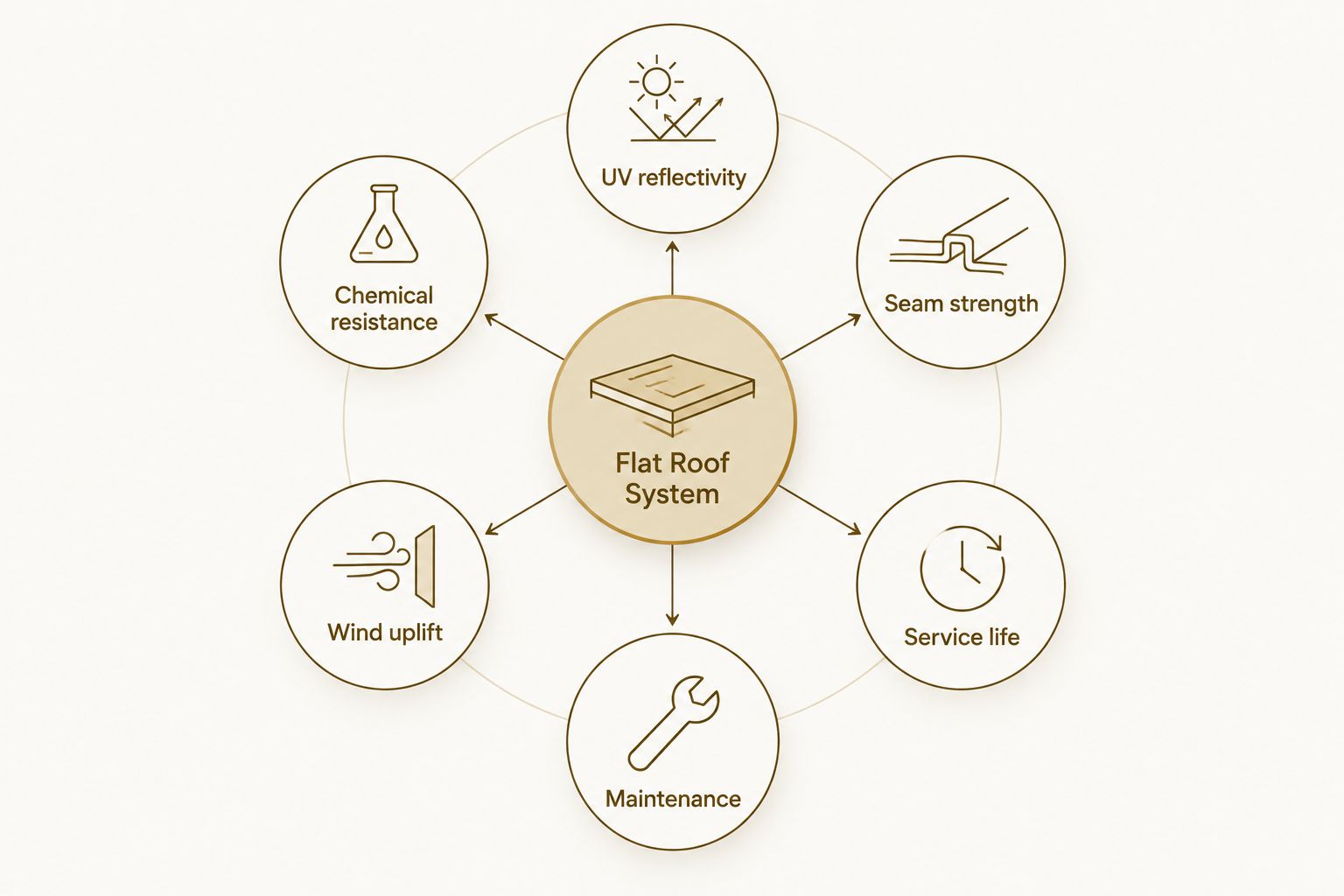
What makes the best flat roof system for commercial buildings
- UV and heat reflectivity — how much solar heat the membrane bounces back, which matters directly for cooling costs in Texas summers
- Puncture and chemical resistance — rooftop foot traffic, HVAC units, and kitchen exhaust grease all stress the membrane differently
- Seam strength and install method — heat-welded seams outperform adhered or mechanically fastened seams over time
- Wind uplift rating — critical for wide-open commercial roofs that catch storm gusts
- Expected service life — how many years before recoating or full replacement
- Maintenance requirements — how often the roof needs inspection, patching, or recoating to hit its full lifespan
Commercial flat roof systems at a glance
| System | Best for | Standout feature | Key limitation |
|---|---|---|---|
| TPO | Hot Texas climates, energy costs | Reflective white membrane, heat-welded seams | Quality varies widely by manufacturer and installer |
| PVC | Grease, oil, chemical exposure | Chemically resistant, strongest weld seams | Higher material cost than TPO or EPDM |
| EPDM | Large flat roofs on a budget | Simple rubber membrane, decades of field history | Black surface absorbs heat, seams can fail if adhered poorly |
| Modified bitumen | Roofs with heavy foot traffic | Multi-ply system resists punctures well | Heavier system, more labor-intensive install |
| Built-up roofing (BUR) | Maximum long-term durability | Multiple layers of felt and asphalt, proven lifespan | Heaviest system, slower and messier install |
| Spray polyurethane foam (SPF) | Irregular rooflines, re-roofing without tear-off | Seamless foam fills low spots and odd shapes | Needs a recoat roughly every 10-15 years to hold its lifespan |
1. TPO: best flat roof system for hot Texas climates
Thermoplastic polyolefin (TPO) is a single-ply white membrane that's heat-welded at the seams, and it's become the default choice for commercial low-slope roofs across Texas because of how much solar heat it reflects. It installs faster than built-up systems and handles the wide temperature swings between a 105-degree August afternoon and a 30-degree winter night without the material going brittle.
TPO pros:
- Reflects UV and heat, which cuts rooftop temperature and cooling load
- Heat-welded seams are stronger than adhered seams
- Lighter weight than BUR or modified bitumen, faster install
- Competitive on material availability across most manufacturers
TPO cons:
- Membrane quality and thickness vary a lot between brands — cheap TPO fails faster
- Seam welds depend heavily on installer skill and weather conditions during install
TPO pricing: Costs vary by square footage, roof condition, and membrane thickness — get a site-specific quote rather than relying on a per-square-foot average.
Best for: Retail buildings, offices, and warehouses looking to cut summer cooling costs. Verdict: Buy.
2. PVC: best flat roof system for grease and chemical exposure
Polyvinyl chloride (PVC) membrane shares TPO's single-ply, heat-welded design but resists oils, greases, and chemical exposure far better. That makes it the standard pick for restaurant rooftops sitting over kitchen exhaust systems and for industrial buildings near chemical storage or processing.
PVC pros:
- Best chemical and grease resistance of any single-ply membrane
- Strong heat-welded seams, similar install method to TPO
- Long track record on restaurant and industrial roofs
PVC cons:
- Costs more than TPO or EPDM for the same square footage
- Fewer manufacturers compared to TPO, which can limit sourcing
Best for: Restaurant rooftops, food processing facilities, and industrial sites with chemical exposure. Verdict: Buy — if your roof sits over a kitchen or chemical process.
3. EPDM: best flat roof system for large flat roofs on a budget
Ethylene propylene diene monomer (EPDM) is a black rubber membrane that's been used on commercial roofs since the 1960s. It's simple, it's been field-tested for decades, and on large, open flat roofs with few penetrations, it's usually the lowest-cost option per square foot among the major membrane systems.
EPDM pros:
- Lowest material cost of the major single-ply membranes
- Decades of proven field performance
- Flexible and resists cracking in temperature swings
EPDM cons:
- Black surface absorbs heat instead of reflecting it, raising cooling costs
- Adhered or taped seams are weaker than heat-welded seams and need more maintenance
- Not the best pick for buildings trying to cut energy bills
Best for: Large distribution centers and warehouses with simple roof geometry and a tighter budget. Verdict: Hold — solid choice if energy cost isn't the priority.
4. Modified bitumen: best flat roof system for heavy foot traffic
Modified bitumen is a multi-ply asphalt-based system reinforced with polymers, torched, cold-applied, or self-adhered in layers. The layered build gives it real puncture resistance, which matters on roofs that get walked on regularly for HVAC service or equipment access.
Modified bitumen pros:
- Multiple layers resist punctures and foot traffic damage
- Can be installed in cooler weather, unlike some single-plies
- Familiar to most commercial roofing crews
Modified bitumen cons:
- Heavier system, slower and more labor-intensive install
- Torch-applied versions carry fire risk during installation
Best for: Buildings with rooftop units serviced often, like hotels or apartment complexes with HVAC access on the roof. Verdict: Buy — for roofs with regular rooftop maintenance access.
5. Built-up roofing (BUR): best flat roof system for maximum durability
Built-up roofing stacks multiple layers of asphalt-saturated felt with a ballast or coating on top, and it's the oldest commercial flat roof system still in wide use. What it lacks in installation speed it makes up for in a long, low-drama service life when installed correctly.
BUR pros:
- Multiple layers give strong redundancy against leaks
- Long history of performance on commercial buildings
- Ballasted versions add extra protection against hail and UV
BUR cons:
- Heaviest system on this list, requires structural capacity to match
- Slower, messier install than single-ply membranes
Best for: Buildings where long-term durability matters more than install speed or upfront labor cost. Verdict: Buy — for owners planning to hold the property long term.
6. Spray polyurethane foam (SPF): best flat roof system for irregular rooflines
SPF is sprayed on as a liquid that expands into a seamless foam layer, then coated for UV protection. Because it's applied wet, it fills low spots, curves around HVAC curbs, and follows odd rooflines that would require custom flashing on any membrane system — and it can often go directly over an existing roof without a tear-off.
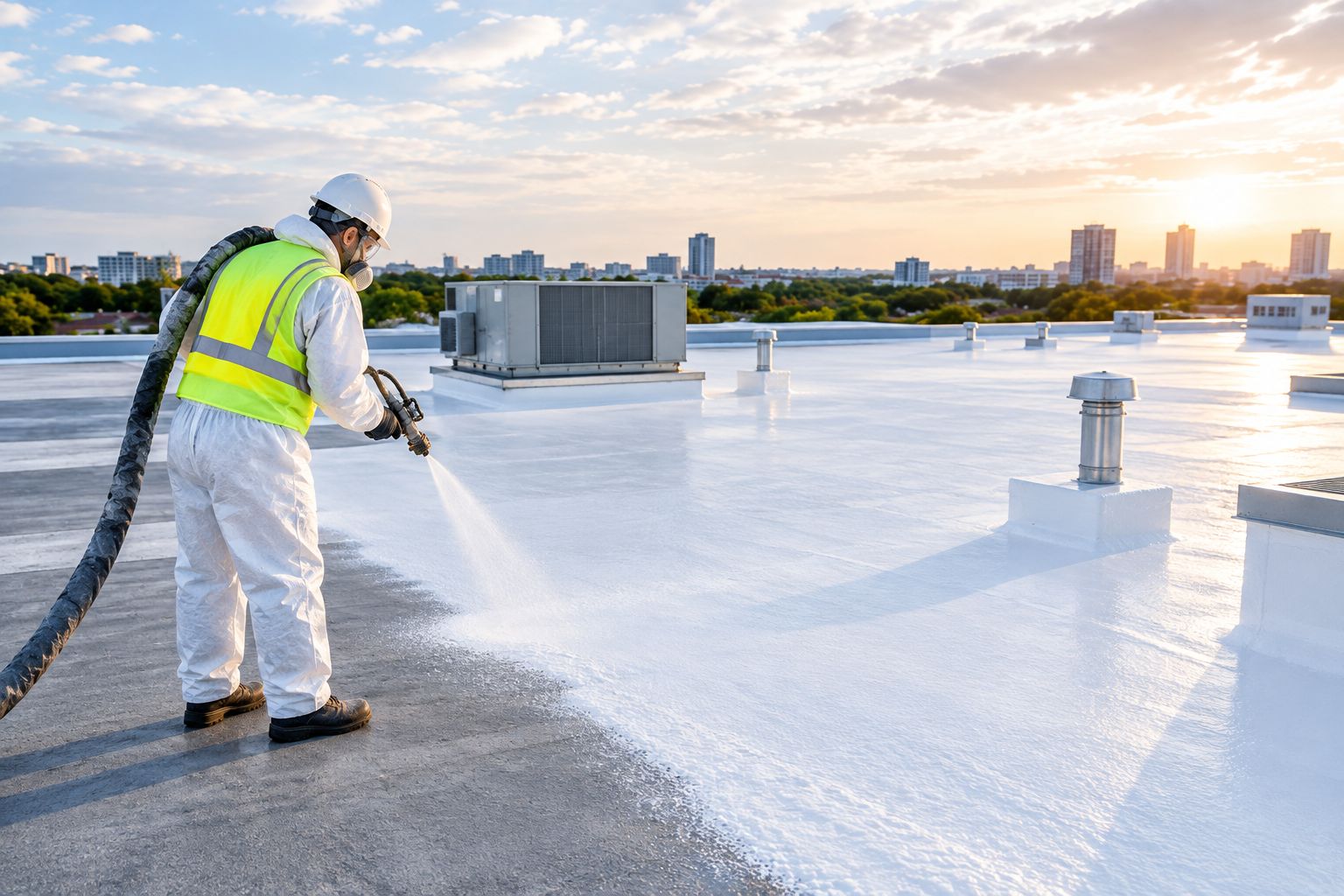
SPF pros:
- Seamless application eliminates seam failure points entirely
- Can be applied over an existing roof, avoiding tear-off cost and disposal
- Fills ponding areas and low spots as part of the application
SPF cons:
- Needs a recoat roughly every 10-15 years to maintain UV protection and lifespan
- Application quality depends heavily on weather conditions and applicator skill
Best for: Buildings with irregular roof shapes, multiple penetrations, or owners who want to avoid a full tear-off. Verdict: Buy — for re-roofing over sound existing substrate.
How we ranked these flat roof systems
Each system was weighed against the six criteria above: UV reflectivity, chemical and puncture resistance, seam strength, wind uplift performance, expected service life, and ongoing maintenance load. None of these systems is universally "best" — a warehouse with a simple roof deck and a restaurant with grease-laden exhaust need different membranes entirely. Eagle Eye Roofing & Contracting Services documents roof condition and building use before recommending a system, which lines up with the approach covered in best commercial roofing systems for Texas businesses.
Get your flat roof inspected
Documented inspection before any system recommendation.
Which flat roof system should you choose?
For most commercial buildings in San Antonio, TPO is the default recommendation for 2026 — the reflectivity cuts summer cooling costs and the heat-welded seams hold up well against Texas storm cycles. If the roof sits over a restaurant kitchen or an industrial process with chemical exposure, PVC is worth the extra cost. Working with a tight budget on a large, simple roof deck, EPDM still gets the job done — just expect higher cooling costs than a reflective membrane. Buildings with odd rooflines or an existing roof you want to avoid tearing off should look at SPF first.
Climate plays into this decision as much as roof type does — the broader comparison in best roof types for hot Texas climates compared covers how reflectivity and material choice interact with San Antonio's summer heat specifically. Budget planning matters too, and the breakdown in how much a roof replacement costs in San Antonio gives a starting point before requesting quotes for 2026 projects.
FAQ
What's the best flat roof system for commercial buildings in 2026?
TPO membrane is the best overall flat roof system for most commercial buildings in San Antonio in 2026 because of its reflectivity and heat-welded seams. Restaurants and industrial sites with chemical exposure are usually better served by PVC.
Is TPO better than EPDM for a commercial roof?
TPO reflects more heat and typically has stronger heat-welded seams, making it better for energy costs. EPDM costs less per square foot and has a longer field track record, making it a solid budget choice for simple, large roofs.
How long does a PVC roof membrane last?
PVC membranes typically last 20 to 30 years when properly installed and maintained. Its chemical resistance means it holds up especially well on restaurant and industrial rooftops.
What flat roof system works best in San Antonio heat?
TPO and PVC both reflect UV and heat better than EPDM's black surface, which lowers rooftop temperature and cooling costs. Both use heat-welded seams that hold up in wide Texas temperature swings.
Is spray foam roofing worth it for commercial buildings?
Spray polyurethane foam (SPF) is worth it for buildings with irregular rooflines or an existing roof you want to avoid tearing off, since it applies as a seamless liquid. It needs a recoat roughly every 10-15 years to maintain its lifespan.
How much does a commercial flat roof replacement cost?
Cost depends on square footage, membrane type, roof condition, and structural requirements. Get a documented, site-specific inspection before comparing quotes for a 2026 project.
Can you install a new membrane over an existing flat roof?
Spray polyurethane foam (SPF) can often be applied over a sound existing roof without a full tear-off, which most membrane systems require. A roof inspection determines whether the existing substrate can support a recover.
What is the most durable flat roof system?
Built-up roofing (BUR) has the longest proven track record for durability among commercial flat roof systems, thanks to its multiple layered plies. It's heavier and slower to install than single-ply membranes like TPO or PVC.
One last thing
The membrane brand matters less than most property owners think — installation quality and seam work decide whether a flat roof hits 20 years or fails at year 8. A cheap TPO install with sloppy heat-welded seams will underperform a properly installed EPDM roof every time, regardless of what the spec sheet says.